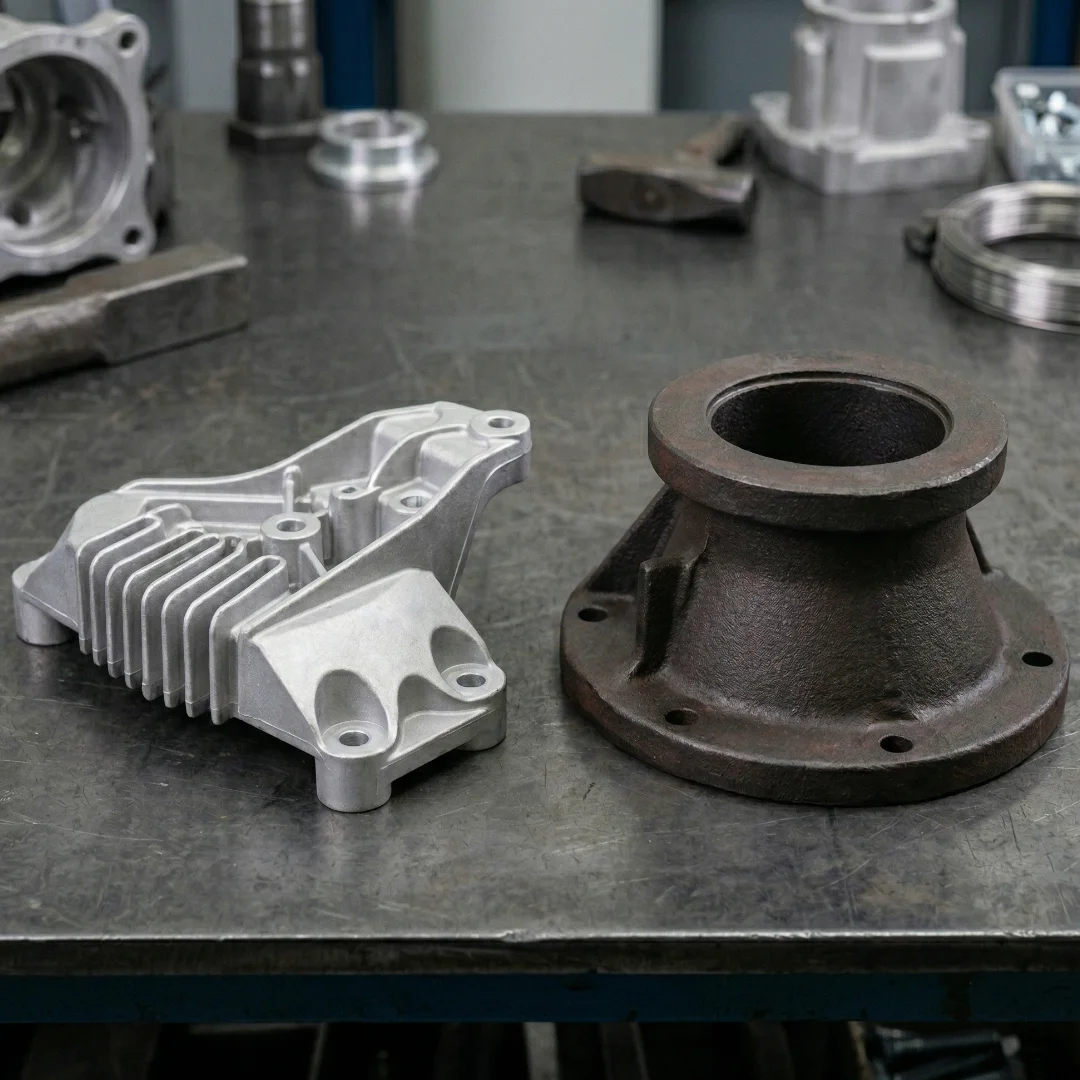
Casting Shrinkage and Porosity: Causes, Effects and How to Prevent Them
Shrinkage and porosity are the two most common defects in metal castings. Both are caused by what happens to metal as it transitions from liquid to solid — and both can compromise a part’s mechanical properties, pressure integrity, or surface finish if not controlled. This guide explains what they are, why they occur, and how a good foundry prevents them.
What Is Casting Shrinkage?
All metals contract as they cool and solidify. This contraction happens in three stages: Liquid shrinkage — the metal contracts while still molten as temperature drops toward the solidification point. Solidification shrinkage — the metal contracts as it changes from liquid to solid. This is the most significant stage and the primary cause of shrinkage defects. Solid shrinkage — the solid casting continues to contract as it cools to room temperature. This is predictable and is accounted for in the tooling design. When metal solidifies faster in some areas than others, the last region to solidify can be starved of liquid metal to compensate for the contraction. The result is a void — a shrinkage cavity — inside or on the surface of the casting.
Types of Shrinkage Defect
Open shrinkage forms on the casting surface where it is visible and can be detected during inspection. It typically appears as a depression or sink mark. Closed shrinkage (also called shrinkage porosity) forms inside the casting where it is not immediately visible. It requires X-ray inspection, CT scanning, or destructive testing to detect. Internal shrinkage is more dangerous because it may not be found until the part is in service. Pipe shrinkage is a deep, narrow void that forms in thick sections or risers as the last metal to solidify pulls inward.
What Is Porosity?
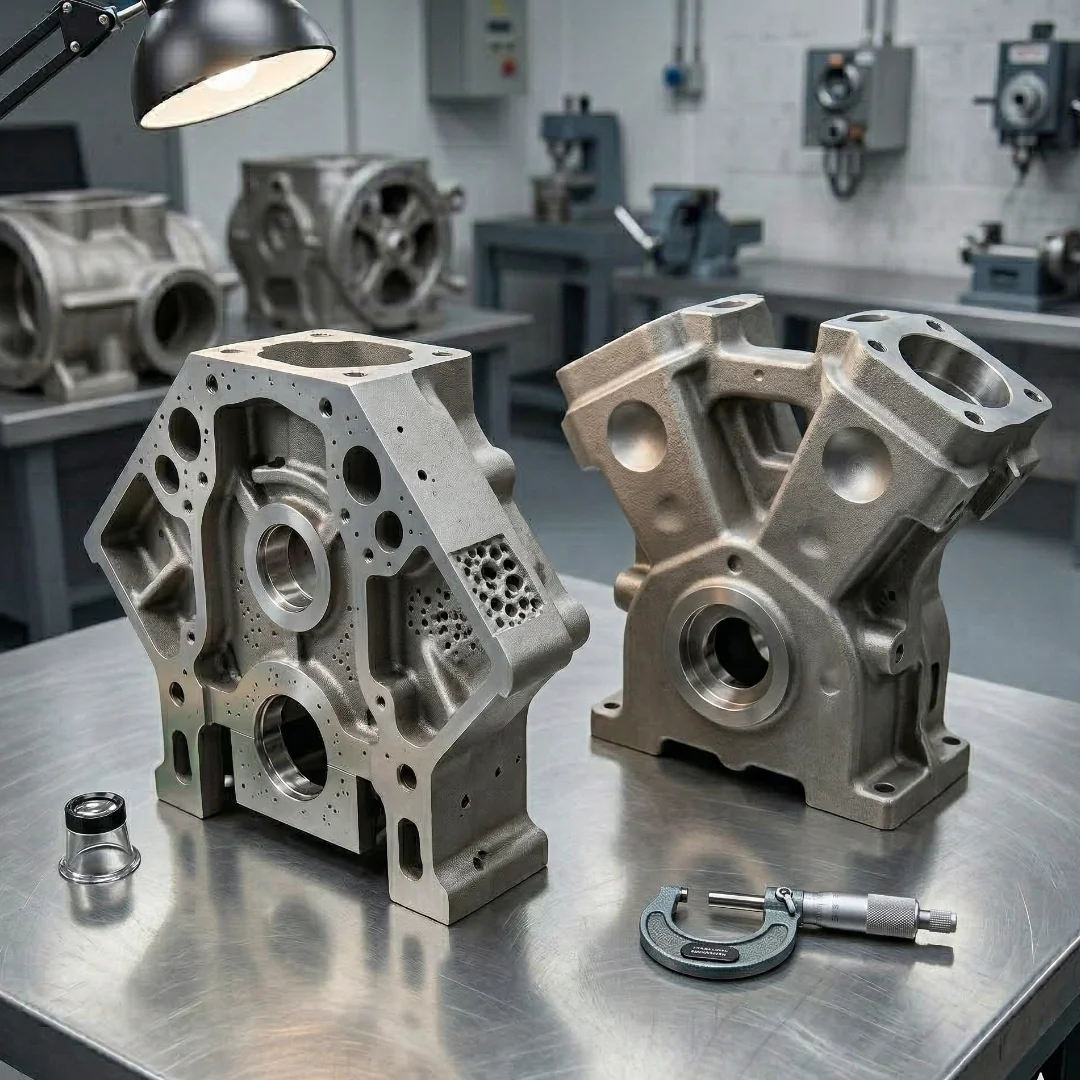
Porosity refers to small voids or holes distributed through the casting. Unlike shrinkage cavities, porosity tends to occur as clusters of small voids rather than a single large void. Gas porosity is caused by dissolved gases — typically hydrogen — being expelled from the metal as it solidifies. As the metal cools, its ability to hold dissolved gas decreases, and the gas forms bubbles that become trapped as the metal solidifies around them. Shrinkage porosity is caused by the same mechanism as shrinkage cavities but produces a more distributed network of micro-voids rather than a single large defect.
How Investment Casting Controls Porosity
Metal quality — gas porosity is minimised by controlling the quality of the metal charged into the furnace. Wet or contaminated scrap introduces hydrogen. Melting under controlled conditions reduces gas pickup. Pouring temperature — metal poured too hot contains more dissolved gas and takes longer to solidify, giving gas more time to nucleate and grow. Controlled pouring temperature is critical. Degassing — aluminium alloys in particular are prone to hydrogen porosity and are routinely degassed before pouring using rotary degassing or inert gas purging. Shell permeability — investment casting shells are designed to be permeable, allowing trapped air and gases to escape through the shell wall rather than being forced into the solidifying metal.
Why Shrinkage and Porosity Matter
A casting with internal voids may fail under load, particularly under cyclic fatigue loading where cracks initiate at stress concentrations. For pressure-containing parts — valve bodies, pump housings, hydraulic components — internal porosity creates leak paths that cause failures in service. Porosity also affects machinability. When a machined surface intersects a void, it creates a pit or crater that may be unacceptable cosmetically or functionally.
How Investment Casting Controls Shrinkage
Investment casting has several inherent advantages over other casting processes when it comes to controlling shrinkage. Riser and gating design — the gating system is designed so that thicker sections are fed by risers that remain liquid longer than the casting itself. Metal flows from the riser into the casting to compensate for solidification shrinkage, concentrating any voids in the riser rather than the part. Directional solidification — the mould and process are designed so the casting solidifies progressively from the thinnest sections toward the risers. This ensures that liquid metal is always available to feed solidifying regions. Shell temperature control — in investment casting, the ceramic shell is preheated before pouring. A well-controlled shell temperature slows the initial cooling rate and helps achieve the directional solidification needed for sound castings. Wall thickness design — abrupt changes in section thickness create hot spots where solidification is delayed and shrinkage risk is highest. Good casting design minimises abrupt transitions.
Inspection and Acceptance Standards
Not all porosity is rejectable. Acceptance criteria depend on the application and are defined in standards such as ASTM E446 (radiographic inspection of steel castings) and customer-specific drawing notes. For aerospace and safety-critical applications, zero internal porosity is typically required, verified by X-ray or CT scan. For general industrial components, small distributed porosity below a defined threshold is often acceptable. A competent foundry will agree acceptance criteria with the customer before production begins, carry out sampling inspection during the first production run, and maintain inspection records.
Summary
Shrinkage and porosity are inherent risks in any casting process. Investment casting — with its controlled shell temperatures, carefully designed gating and risering, and good metal practice — produces castings with lower defect rates than sand casting or die casting for most alloy and geometry combinations. For critical applications, X-ray or CT inspection provides confidence that internal integrity meets specification. If you have a component where internal integrity is a requirement, contact us to discuss inspection standards and how we design our tooling to minimise defect risk from the outset.