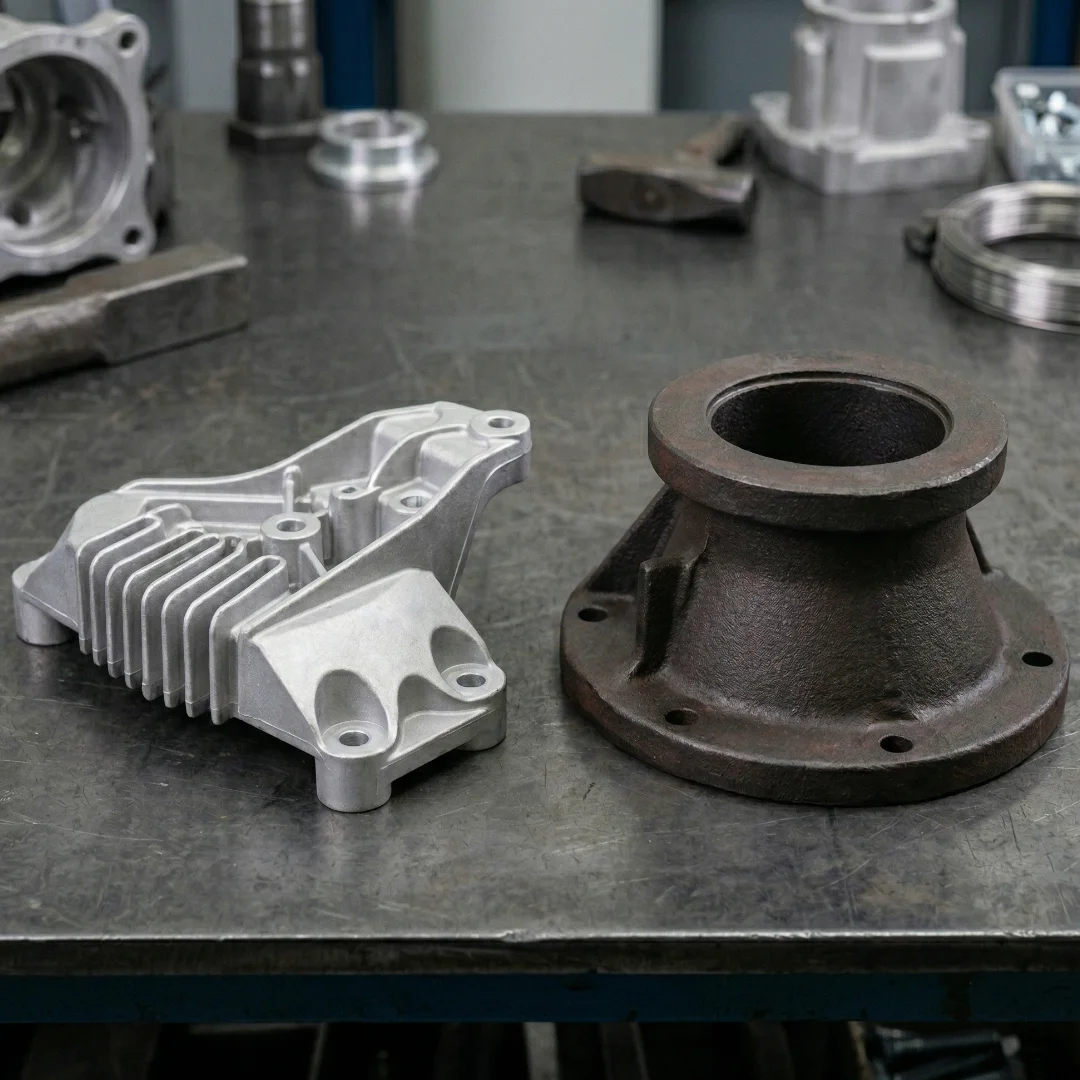
Investment Casting for Automotive: Components, Materials and Advantages
Investment casting is one of the primary manufacturing processes used in aerospace. It produces complex, high-integrity metal components that cannot be made economically by any other method, from turbine blades operating at extreme temperatures to structural brackets carrying flight loads. This guide covers what makes investment casting suited to aerospace applications and what buyers and engineers need to know when specifying cast components.
Why Automotive Uses Investment Casting
Automotive components are under constant pressure to reduce weight, improve performance, and lower total production cost. Investment casting addresses all three:
- Complex geometry produced in a single casting eliminates assembly of multiple parts, reducing weight and potential failure points
- Near-net-shape production minimises machining, reducing cost per finished part
- Broad alloy compatibility across stainless steel, alloy steel, aluminium, and titanium allows material selection to be driven by engineering requirements rather than process limitations
- Investment casting is cost-effective at volumes from prototypes up to tens of thousands of parts per year, covering most automotive tier supplier volumes
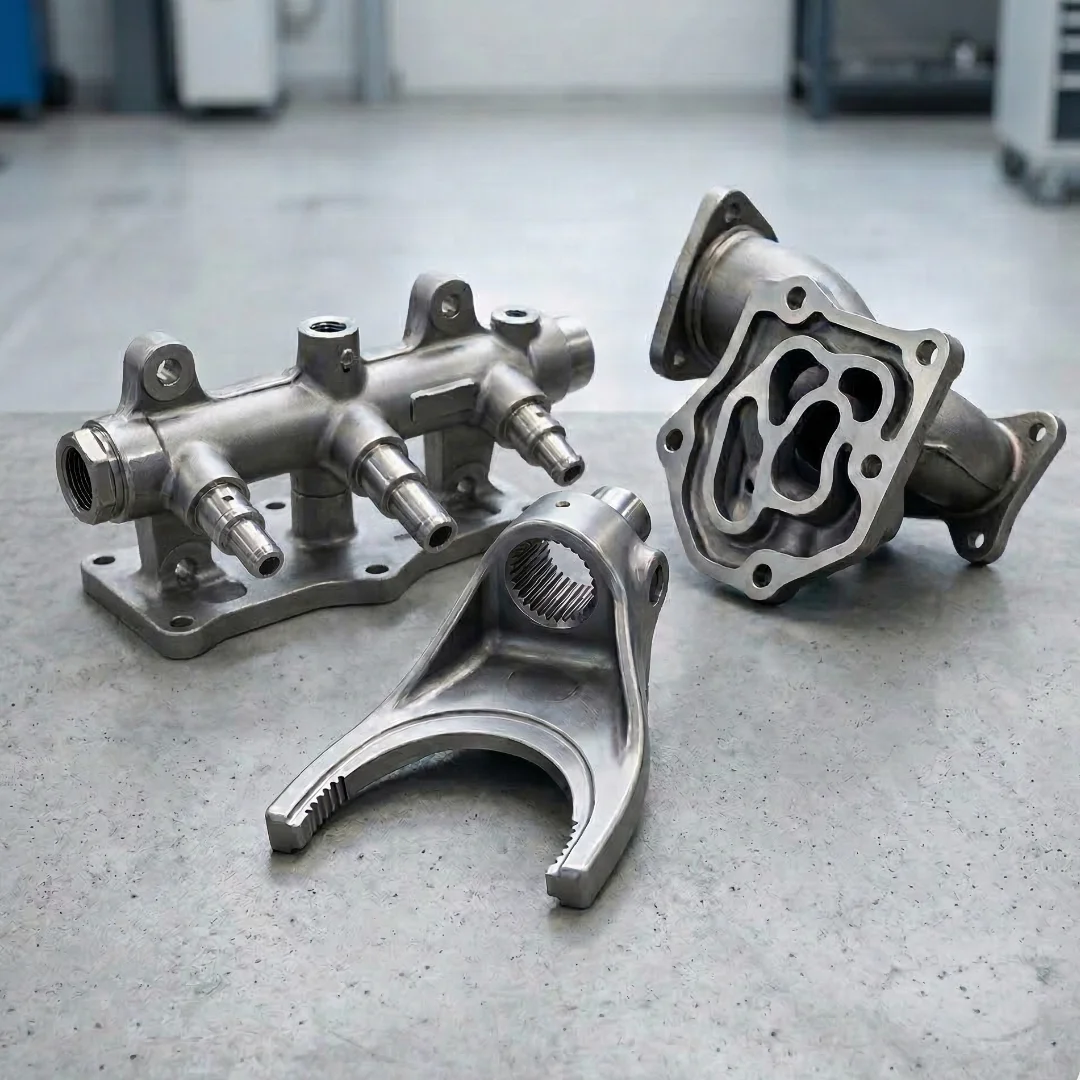
Automotive Applications of Investment Casting
Engine Components
Turbocharger housings and impellers require complex internal geometry and high-temperature alloys such as stainless steel and nickel alloys, both of which investment casting handles well. Exhaust manifolds in high-temperature stainless steel or heat-resistant alloy replace fabricated sheet metal assemblies, improving durability and reducing assembly cost. Rocker arms and valve train components are produced in alloy steel or stainless steel, often requiring secondary grinding on wear surfaces. Oil and coolant system housings benefit from the complex internal passages for fluid routing that investment casting can produce in a single operation.
Transmission and Driveline
Gear selector forks and housings are produced with the complex geometry transmission components require, with good dimensional accuracy that minimises machining on bearing surfaces and mating faces. Differential housings and brackets in alloy steel provide structural driveline components with good strength and fatigue resistance.
Suspension and Steering
Knuckles, brackets, and links in aluminium or alloy steel reduce weight in suspension components while accommodating the complex geometry they require. Steering column components including mounting brackets and housings are well suited to investment casting.
Braking Systems
Caliper brackets and mounting components in stainless or alloy steel are a natural fit for investment casting given their combination of complex geometry and corrosion resistance requirements.
Electric Vehicles
Investment casting is increasingly used in electric vehicle platforms for motor housings, battery system brackets, and structural components. EV architecture places a premium on weight reduction and geometric efficiency, both of which investment casting handles better than machined billet or fabricated assemblies.
Materials for Automotive Investment Casting
| Material | Grade | Key Properties | Typical Applications |
|---|---|---|---|
| Stainless steel | 304, 316L, 17-4 PH | Corrosion resistance, good strength | Exhaust components, brackets, fluid systems |
| Alloy steel | 4140, 4340, 8620 | High strength, good fatigue resistance | Driveline, suspension, transmission components |
| Aluminium | A356, A357 | Low weight, good castability | Brackets, housings, structural nodes |
| Nickel alloys | Inconel 625, 718 | High temperature, oxidation resistance | Turbocharger components, exhaust systems |
| Duplex stainless | 2205 | High strength and corrosion resistance | High-stress structural components |
Investment Casting vs Die Casting for Automotive
Die casting is the dominant process for high-volume aluminium automotive parts such as engine blocks, gearbox housings, and structural nodes. Investment casting is the better choice when:
- Alloy requirements go beyond aluminium, zinc, or magnesium
- Geometry is too complex for die casting, with internal undercuts, thin walls, or features that prevent die separation
- Volumes do not justify die casting tooling investment, which typically runs from £20,000 to £100,000 or more
- Porosity requirements are strict, as investment casting typically produces sounder castings than die casting for structural applications
Tolerances and Surface Finish
Investment castings for automotive applications typically achieve ±0.1 to 0.25mm as-cast, tightened to ±0.01 to 0.05mm on machined critical surfaces. As-cast surface finish of Ra 1.6 to 6.3μm means many non-functional surfaces are usable without further finishing.
Design Considerations
Wall thickness: minimum recommended wall thickness is 1.5 to 2mm for most automotive alloys. Uniform wall thickness reduces shrinkage risk and improves dimensional consistency. Part consolidation: review assemblies for consolidation opportunities. Multiple stamped and welded components are frequently replaceable with a single investment casting at lower total cost. Machining datums: identify clear datum surfaces early in the design process to allow efficient CMM inspection and CNC machining setup. Secondary operations: bearing surfaces, sealing faces, and thread features are typically machined after casting. Allow 0.5 to 1mm stock on these surfaces.
Prototype to Production
Investment casting is one of the few processes that works economically from single prototypes through to production volumes. Tooling cost is low enough that prototype castings in the actual production alloy are viable early in the development programme. This means prototypes can be used for full mechanical testing with confidence that production parts will perform the same way.