Why Choose Duplex 2205 Stainless Steel? Properties, Applications and Comparisons
Duplex 2205 stainless steel is one of the most specified materials for demanding applications where standard austenitic grades like 304 and 316L are not sufficient. Its combination of high strength, excellent corrosion resistance, and resistance to stress corrosion cracking makes it the preferred material for marine structures, oil and gas components, chemical processing equipment, and high-stress architectural hardware. This guide explains what makes 2205 different, when to specify it, and how it performs in investment casting and stamping applications.
What Is Duplex 2205?
Duplex 2205 (UNS S32205/S31803) is a duplex stainless steel, meaning it has a microstructure that is approximately half austenite and half ferrite. This mixed microstructure is the source of its key property advantages over purely austenitic grades. Composition: approximately 22% chromium, 5% nickel, 3% molybdenum, 0.15% nitrogen. This combination of high chromium, molybdenum, and nitrogen gives 2205 a Pitting Resistance Equivalent Number (PREN) above 35, which is substantially higher than 316L (PREN around 24). The higher the PREN, the more resistant the steel is to pitting corrosion in chloride environments.
Mechanical Properties
The dual-phase microstructure of 2205 produces mechanical properties that are significantly better than standard austenitic grades. Yield strength: 450 to 620 MPa, approximately twice the yield strength of 304 or 316L. Tensile strength: 620 to 820 MPa. Elongation at break: 25% minimum, which means it retains good ductility despite its high strength. Hardness: approximately 250 to 290 HB. The combination of high strength and good ductility means that 2205 components can be designed with thinner cross-sections than 304 or 316L equivalents while maintaining the same load-bearing capacity. This reduces weight and material cost in structural applications.
Corrosion Resistance
2205 outperforms standard austenitic grades in most corrosive environments. Pitting and crevice corrosion: the high chromium, molybdenum, and nitrogen content gives 2205 substantially better resistance to pitting and crevice corrosion in chloride environments than 316L. This makes it the standard choice for marine applications and coastal installations. Stress corrosion cracking (SCC): this is where 2205 shows its most significant advantage. Austenitic grades like 304 and 316L are susceptible to chloride-induced stress corrosion cracking at elevated temperatures, a failure mode that can occur without warning. The ferritic component of 2205’s microstructure makes it far more resistant to SCC, which is why it is specified for pressure vessels, pipework, and structural components in chloride environments. General corrosion: 2205 performs well in most acidic and alkaline environments encountered in chemical processing and food manufacturing.
2205 vs 304 and 316L
| Property | 304 | 316L | 2205 Duplex |
|---|---|---|---|
| Yield strength (MPa) | 205 | 170 | 450 to 620 |
| Tensile strength (MPa) | 515 | 485 | 620 to 820 |
| PREN (pitting resistance) | 18 to 20 | 22 to 24 | 35 to 40 |
| Stress corrosion cracking resistance | Low | Moderate | High |
| Chloride pitting resistance | Low | Moderate | Excellent |
| Max service temperature | 870°C (intermittent) | 870°C (intermittent) | 300°C (duplex limits) |
| Relative cost | Lowest | Medium | Higher |
| Best for | General industrial, mild environments | Marine, chemical, food (moderate) | High-stress, chloride, SCC risk |
Investment Casting of 2205
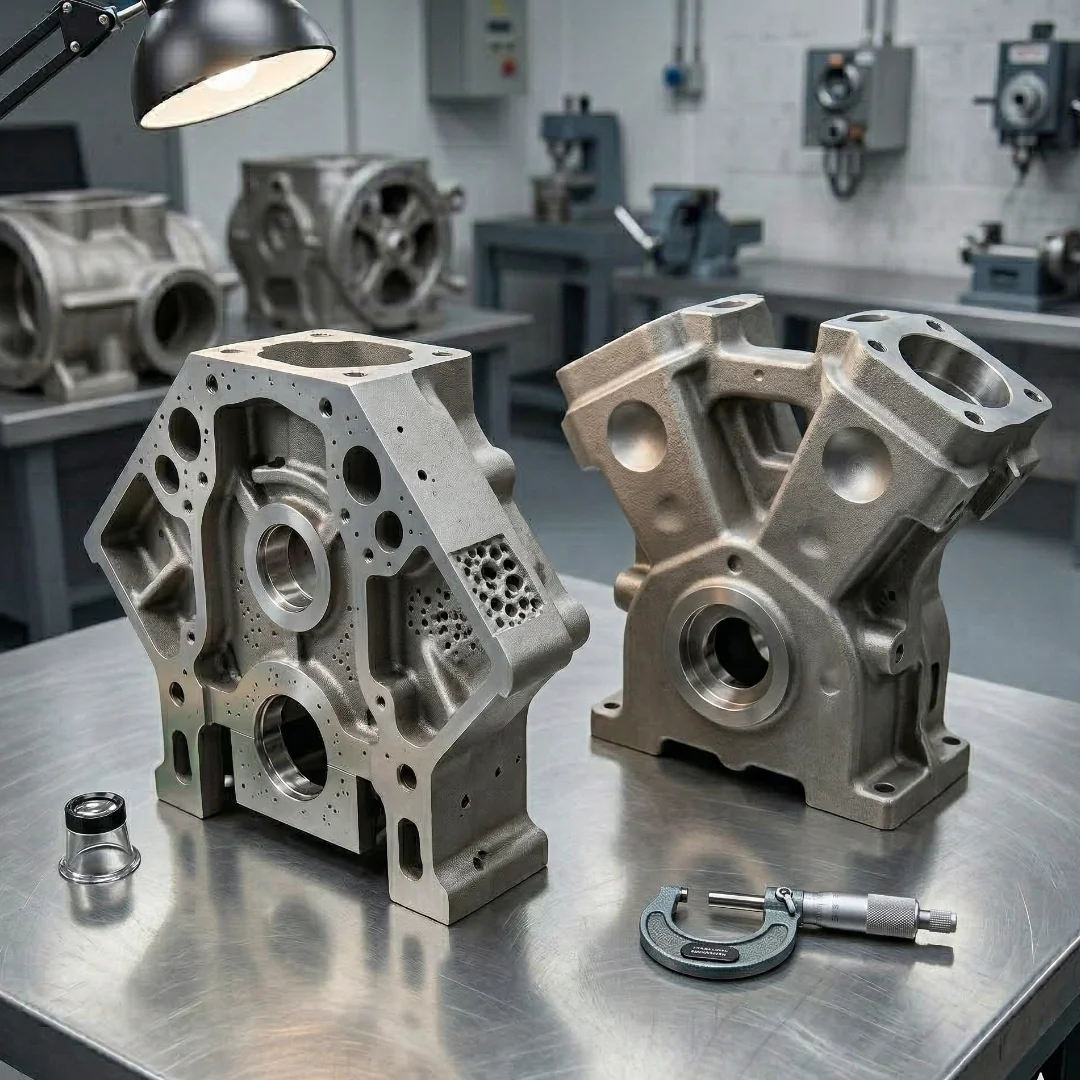
2205 duplex can be investment cast, though it requires more careful process control than standard austenitic grades. The key consideration is maintaining the correct austenite to ferrite phase balance in the finished casting. If cooling is too rapid or too slow, the microstructure can shift toward an excess of one phase, which affects both mechanical properties and corrosion resistance. Pre-heated ceramic shell moulds help control cooling rate. Post-cast solution annealing at 1,020 to 1,100°C followed by rapid quenching is typically required to restore the correct phase balance and optimise properties. When these process controls are applied correctly, investment cast 2205 delivers the same properties as wrought equivalents and is suitable for pressure-containing applications, marine hardware, and chemical processing components. Typical applications for investment cast 2205 include valve bodies, pump housings, manifolds, marine structural fittings, and chemical processing components where both high strength and chloride corrosion resistance are required.
Stamping and Forming of 2205
2205 is significantly harder to form than austenitic grades due to its high yield strength, which requires greater forming forces and more robust tooling. Deep draws that would be straightforward in 304 or 316L can cause cracking in 2205 if tooling design and forming parameters are not correctly managed. Key considerations for 2205 stamping include: generous bend radii (minimum 2 times material thickness for cold forming), appropriate tooling clearances, and controlled blank holder pressure to prevent cracking during deep draw operations. With the right tooling and process parameters, 2205 can be successfully stamped into cover plates, flanges, brackets, and architectural hardware. Post-forming passivation restores the passive layer disrupted during forming.
Applications
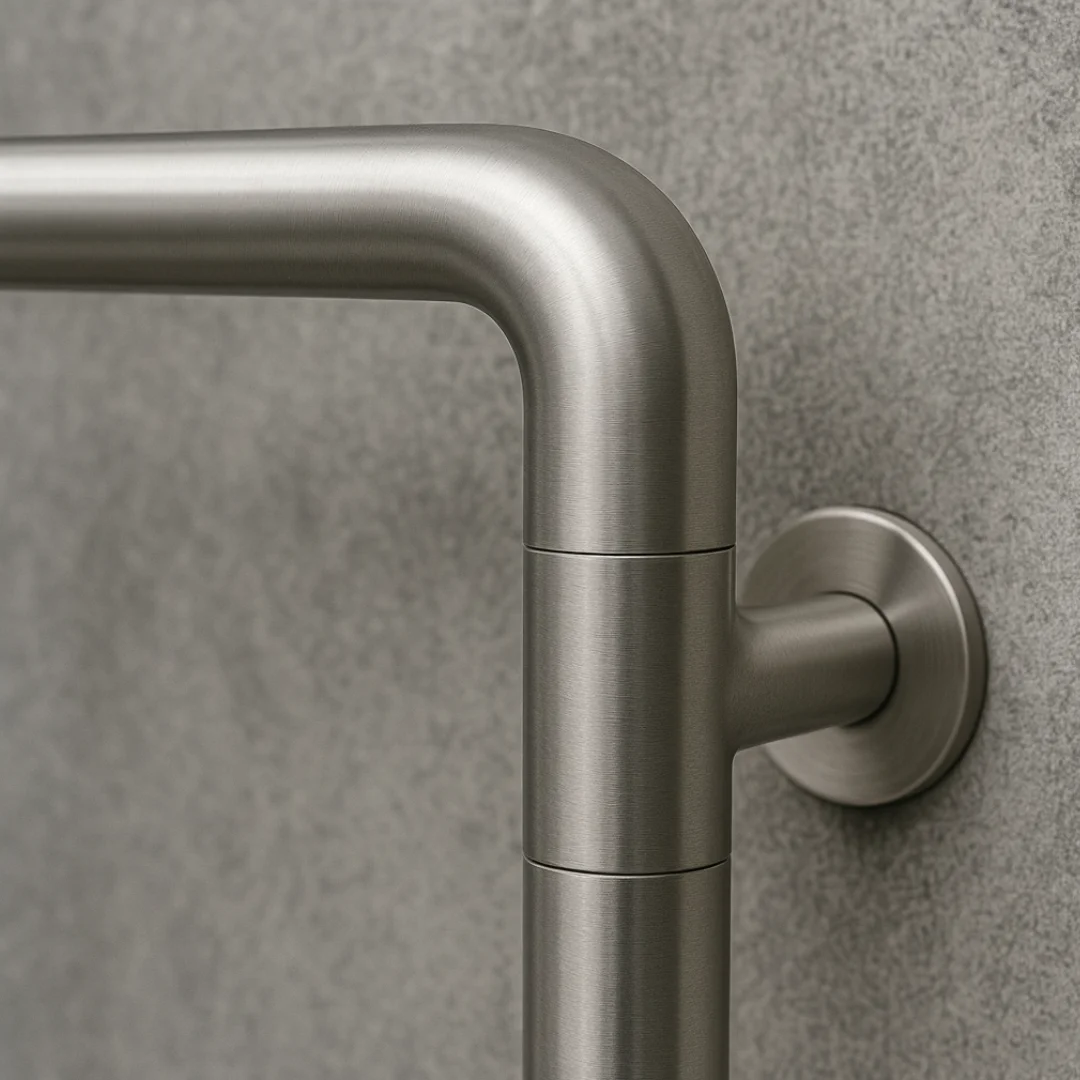
Oil and gas: valve bodies, pump casings, manifolds, subsea hardware, chemical injection components. Marine: structural brackets, deck fittings, propeller shafts, fastener assemblies, cable management hardware, marine handrail systems in coastal or saltwater environments. Chemical processing: heat exchanger components, pipe fittings, agitator shafts, reactor linings. Food and beverage: processing equipment in environments using chloride-based cleaning agents, where 316L is insufficient. Architectural: high-end balustrades and handrail systems in coastal, poolside, or urban environments where 316L does not provide adequate corrosion resistance. Desalination: components in contact with seawater or concentrated brine.
When 2205 Is Not the Right Choice
2205 is not suitable for all applications. Above approximately 300°C, the duplex microstructure is susceptible to embrittlement phenomena that reduce toughness and corrosion resistance. For high-temperature applications, austenitic grades or nickel superalloys are more appropriate. 2205 is also more expensive than 304 and 316L due to its higher alloy content and more demanding processing requirements. For applications where standard austenitic grades provide adequate performance, the cost premium of 2205 is not justified.
Indoor vs. Outdoor Applications
Indoor Environments: Resists chemical cleaners, fingerprints, and abrasion in commercial spaces like offices or retail, maintaining a pristine appearance with minimal upkeep. Outdoor Environments: Excels in coastal, poolside, or urban settings exposed to moisture, salt, and UV; prevents rust and degradation for decades, outperforming 316 in chloride-heavy conditions. For example, in marine-adjacent installations, 2205 components often demonstrate zero pitting after extended exposure, thanks to its high PREN and passivation layer.
Making an Informed Choice in Handrail Fitting Materials
Duplex 2205 stainless steel offers a compelling blend of 2205 stainless steel benefits, strength, corrosion resistance, and longevity that elevates handrail systems from functional to future-proof. When paired with advanced stamping and finishing, it provides engineers with versatile options for innovative designs. Consider material testing and supplier consultations to align specifications with project needs.