Vibration Polishing vs Mirror Polishing vs Electro Polishing: Which Finish Is Right for Your Part?
Surface finish affects more than appearance. For stainless steel components in food processing, marine, pharmaceutical, and architectural applications, the polishing method directly influences corrosion resistance, hygiene performance, cleanability, and long-term durability. This guide compares the three most common finishing methods for investment cast and stamped stainless steel parts so you can specify the right finish from the outset.
What Is Vibration Polishing?
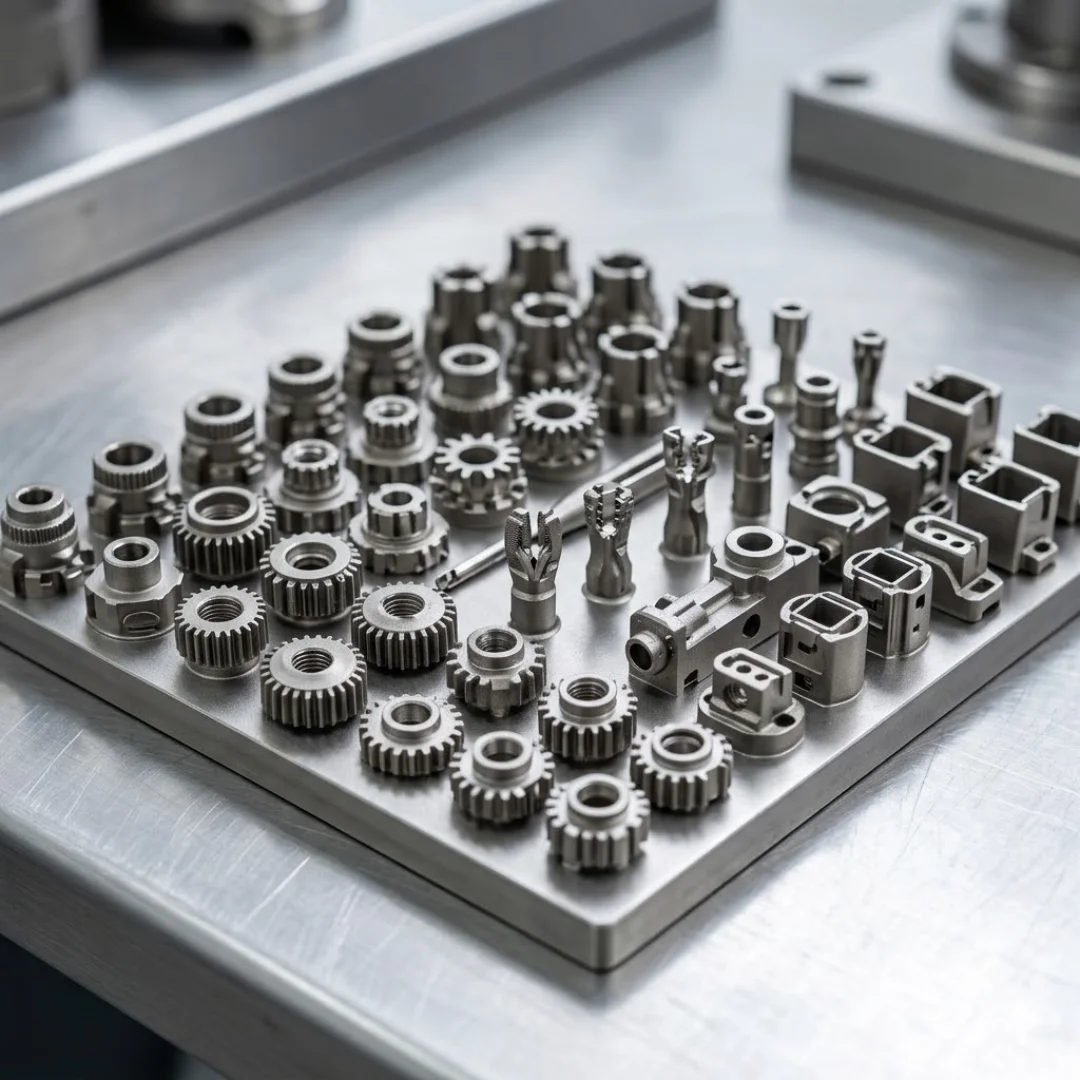
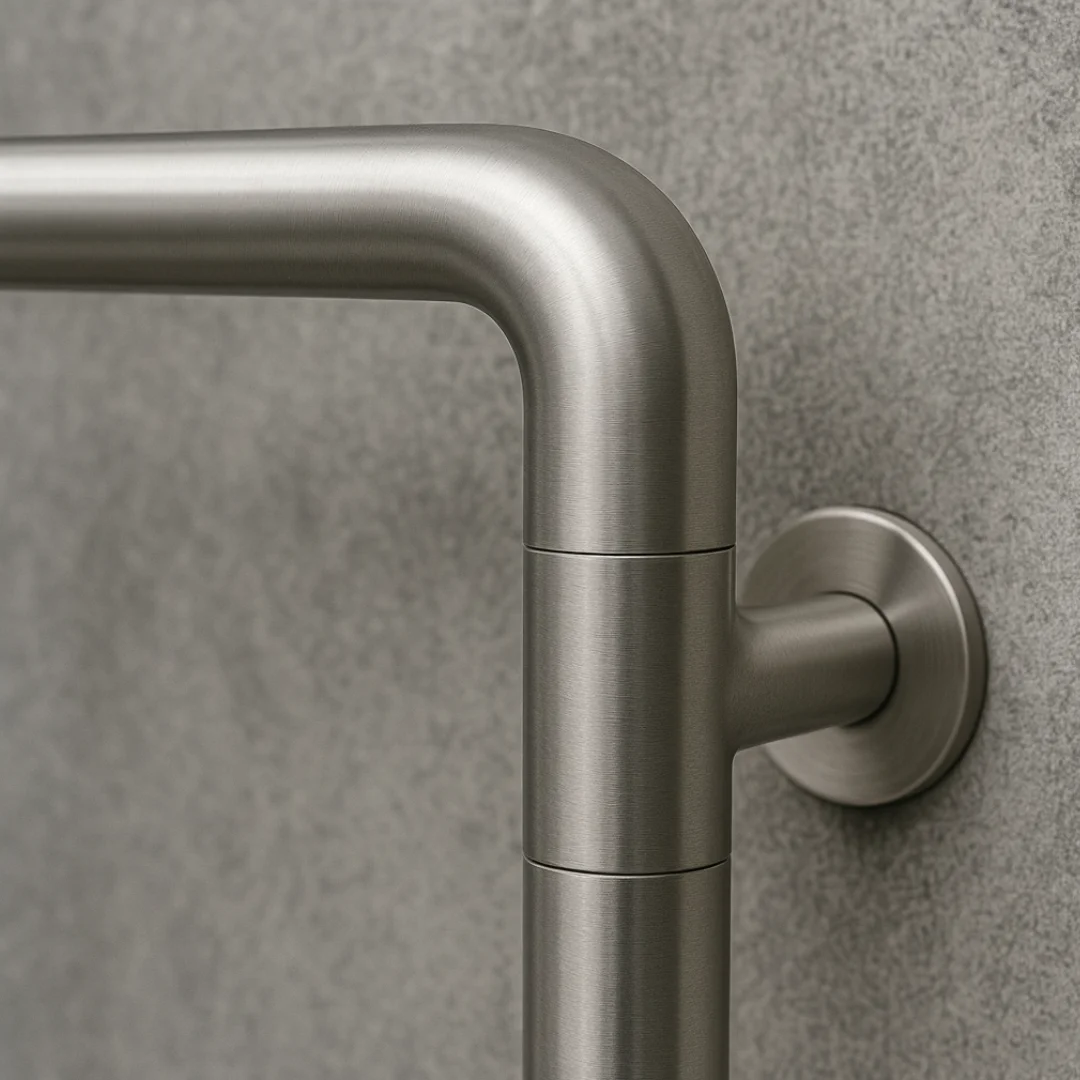
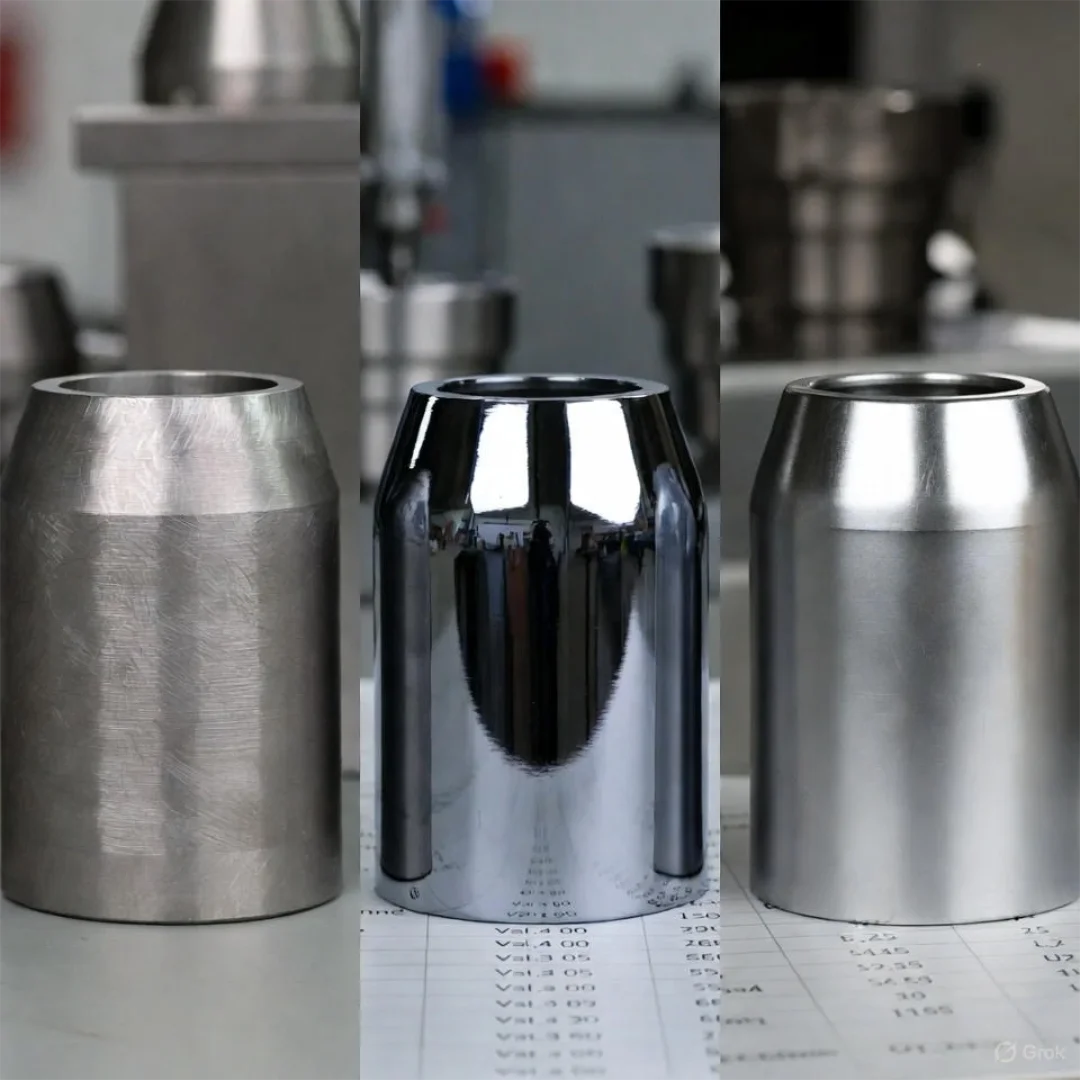
Vibration polishing, also called vibratory or tumble finishing, places parts in a large bowl or trough with abrasive media, water, and compound. The machine vibrates continuously, causing the media to grind against all surfaces simultaneously. The process is automated and can handle large batches of parts at once. The result is a uniform, non-directional matte or satin finish with good edge radiusing. Ra values of 0.4 to 1.6μm are achievable depending on media selection and processing time. Vibration polishing is cost-effective for high-volume production because many parts can be processed together without manual intervention. It is particularly effective at removing sharp edges and burrs left from casting or stamping, which is an important consideration for food-contact components where sharp corners can harbour bacteria. Best suited to: high-volume production of handrail fittings, food machinery components, marine hardware, structural brackets, and any part requiring a clean, consistent satin finish without the cost of hand polishing.
What Is Mirror Polishing?
Mirror polishing, also called mechanical buffing, uses a sequence of progressively finer abrasive belts or wheels applied by hand or machine to achieve a highly reflective surface. A true mirror finish (sometimes referred to as a No.8 finish) has a Ra value below 0.1μm and reflects images clearly. The process requires skilled operators and significant time, making it more expensive than vibration polishing. Parts must be processed individually, which limits throughput for high-volume orders. Mirror polishing produces the most visually impressive finish and is specified for architectural applications where appearance is a primary requirement. However, the mechanical buffing process can introduce directional micro-scratches that, in aggressive cleaning environments, can act as initiation sites for biofilm if passivation is not carried out after polishing. For this reason, mirror-polished components in food-contact applications should always be followed by passivation treatment to restore the chromium oxide layer that is partially disrupted during buffing. Best suited to: high-end architectural handrails and balustrades, decorative fixtures, visible food-service equipment in front-of-house areas, and any application where visual appearance is the primary specification.
What Is Electro-Polishing?
Electro-polishing is an electrochemical process that dissolves a thin layer of metal from the surface of a stainless steel part by passing current through it while it is submerged in an electrolyte solution. Unlike mechanical polishing methods, electro-polishing removes material at a microscopic level, selectively dissolving the peaks of the surface profile and leaving the valleys intact. The result is a smooth, slightly reflective surface with Ra values typically in the range of 0.1 to 0.5μm, achieved without any mechanical contact. Because the process dissolves and removes the outer surface layer, it also removes embedded iron particles, heat tint from welding, and micro-cracks introduced during machining or forming. Electro-polishing significantly increases the chromium-to-iron ratio at the surface, which strengthens the passive oxide layer and delivers substantially better corrosion resistance than mechanically polished equivalents, particularly in chloride-rich or acidic environments. Studies by EHEDG (European Hygienic Engineering and Design Group) and ASME BPE (Bioprocessing Equipment) consistently show that electro-polished surfaces retain the least bacterial contamination after cleaning-in-place cycles, making electro-polishing the standard specification for hygiene-critical components in pharmaceutical, dairy, and food processing applications. Best suited to: pump impellers, valve bodies, mixer shafts, stirring rods, pharmaceutical and dairy equipment, any part in direct contact with food or liquid products, and components operating in marine or chloride-rich environments where maximum corrosion resistance is required.
Direct Comparison
| Factor | Vibration Polishing | Mirror Polishing | Electro-Polishing |
|---|---|---|---|
| Typical Ra value | 0.4 to 1.6μm | Below 0.1μm | 0.1 to 0.5μm |
| Surface appearance | Uniform matte or satin | Highly reflective mirror | Smooth, slightly reflective |
| Process type | Mechanical (batch) | Mechanical (manual) | Electrochemical |
| Corrosion resistance | Good | Good (better after passivation) | Excellent |
| Hygiene performance | Good | Good (with passivation) | Excellent — lowest bacterial retention |
| Edge radiusing | Excellent | Moderate | Good |
| Cost | Low | High | Medium to high |
| Throughput | High — batch process | Low — manual, part by part | Medium — batch process |
| Best for | Structural, architectural, food hardware | Decorative, high-visibility architectural | Food-contact, pharmaceutical, marine |
Which Finish Should You Specify?
The right choice depends on the application and the environment the part will operate in. For structural and architectural components with a moderate hygiene requirement, vibration polishing delivers the best value. It is consistent, cost-effective, and produces a surface that is easy to clean and maintain. For high-end architectural work where appearance is the primary consideration, mirror polishing is the appropriate choice, provided passivation follows the polishing process. For any component in direct contact with food, liquid, or pharmaceutical product, or any part operating in an aggressive corrosive environment, electro-polishing is the correct specification. The additional cost is justified by the superior hygiene performance and the longer service life. In some applications, a combination approach is used: vibration polishing first to achieve a consistent base finish, followed by electro-polishing to achieve both good appearance and maximum hygiene performance.