Reducing Component Weight by 24% Without Compromising Structural Load: Estebro
The Product
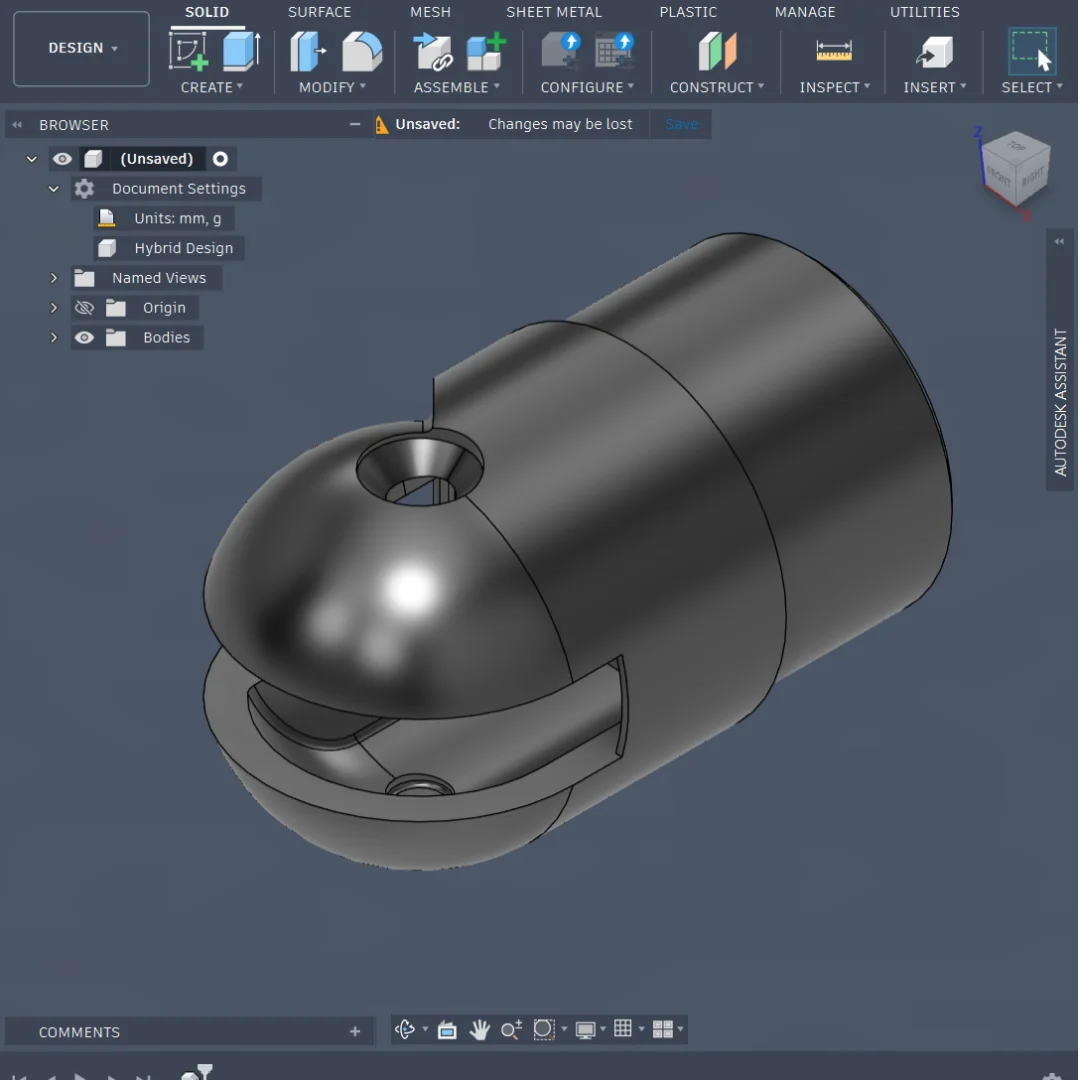
Estebro are specialist in stainless steel architectural hardware based in Aragon, Spain. Their product range covers handrail and balustrade fittings, door hardware and sliding door systems for architectural and construction projects across Europe. The company holds ISO 9001 certification and supplies both standard catalogue products and custom fabrications to the construction industry. This project centred on a structural bracket used in Estebro’s handrail and balustrade systems. The component is the primary load-bearing element of the assembly, approximately 120 x 100 x 60 mm, investment cast in Duplex 2205 stainless steel. All structural load from the handrail transfers through this bracket to its fixing point, making its integrity non-negotiable.
The Problem
Estebro’s brief had two requirements that pulled in opposite directions. First, strict dimensional tolerances: a casting blank tolerance of 0.5 mm across all critical positions, required to ensure correct fit and structural performance during installation. Second, a weight reduction target. The component was performing well structurally, but Estebro needed to reduce its weight to lower material costs across production volumes. Duplex 2205 carries a cost premium over standard stainless grades, so any reduction in material per component compounds meaningfully at scale. Achieving both at once meant reducing material without degrading the load path through the bracket, and doing it without extending tooling lead times.
The Solution
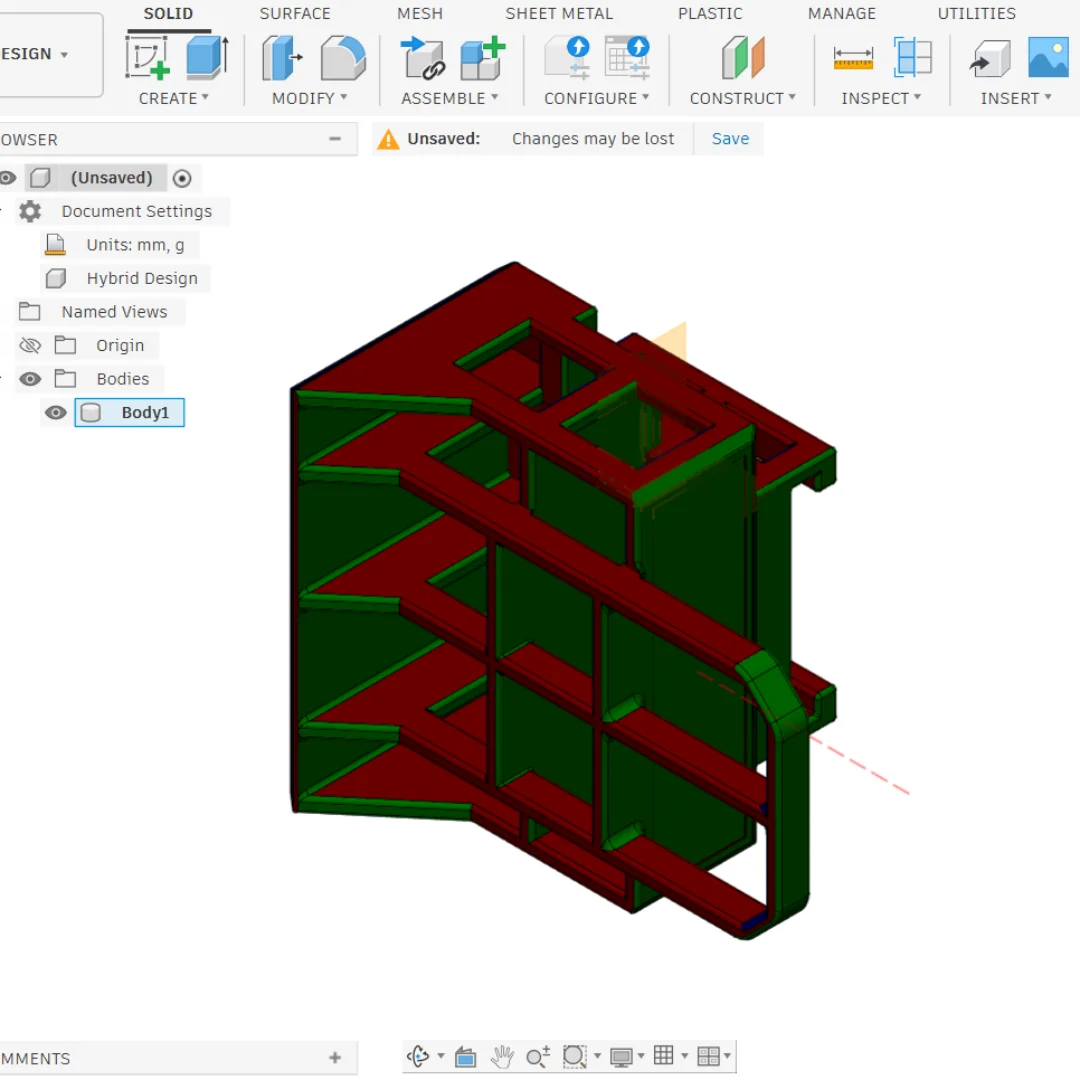
Our engineers approached the problem as a topology exercise. The original design used solid sections throughout. Load analysis identified regions of the bracket that carry little structural demand under the applied load case, and those regions were redesigned as a hollow ribbed framework, preserving full section properties along the primary load path while removing material elsewhere. The redesigned geometry reduced component weight from 1.25 kg to 0.95 kg, a 24% reduction per part. Producing the hollow internal structure required revised tooling. The wax pattern for a ribbed hollow geometry cannot be pulled from the same die as a solid equivalent. Our team redesigned the mould to accommodate the internal framework, validating the approach before committing to production tooling. The result was a casting that hit the 0.5 mm blank tolerance consistently across all critical positions, with no extension to the agreed production lead time.
Outcome
The production component met all three of Estebro’s requirements. Structural load capacity was maintained. Dimensional tolerances were achieved across all critical positions. And weight came down from 1.25 kg to 0.95 kg, delivering the material cost saving Estebro needed on every unit produced. For Paula Malo and the team at Estebro, the outcome confirmed that investment casting with proper engineering input at the design stage can deliver cost efficiency gains that are simply not available from subtractive or fabricated alternatives.
We needed to reduce weight on a load-bearing component without touching its structural performance or tolerance requirements. Apex understood the constraint immediately, redesigned the internal geometry, and delivered exactly what we needed without increasing lead times or cost. That kind of practical engineering input is what makes them a supplier worth working with.