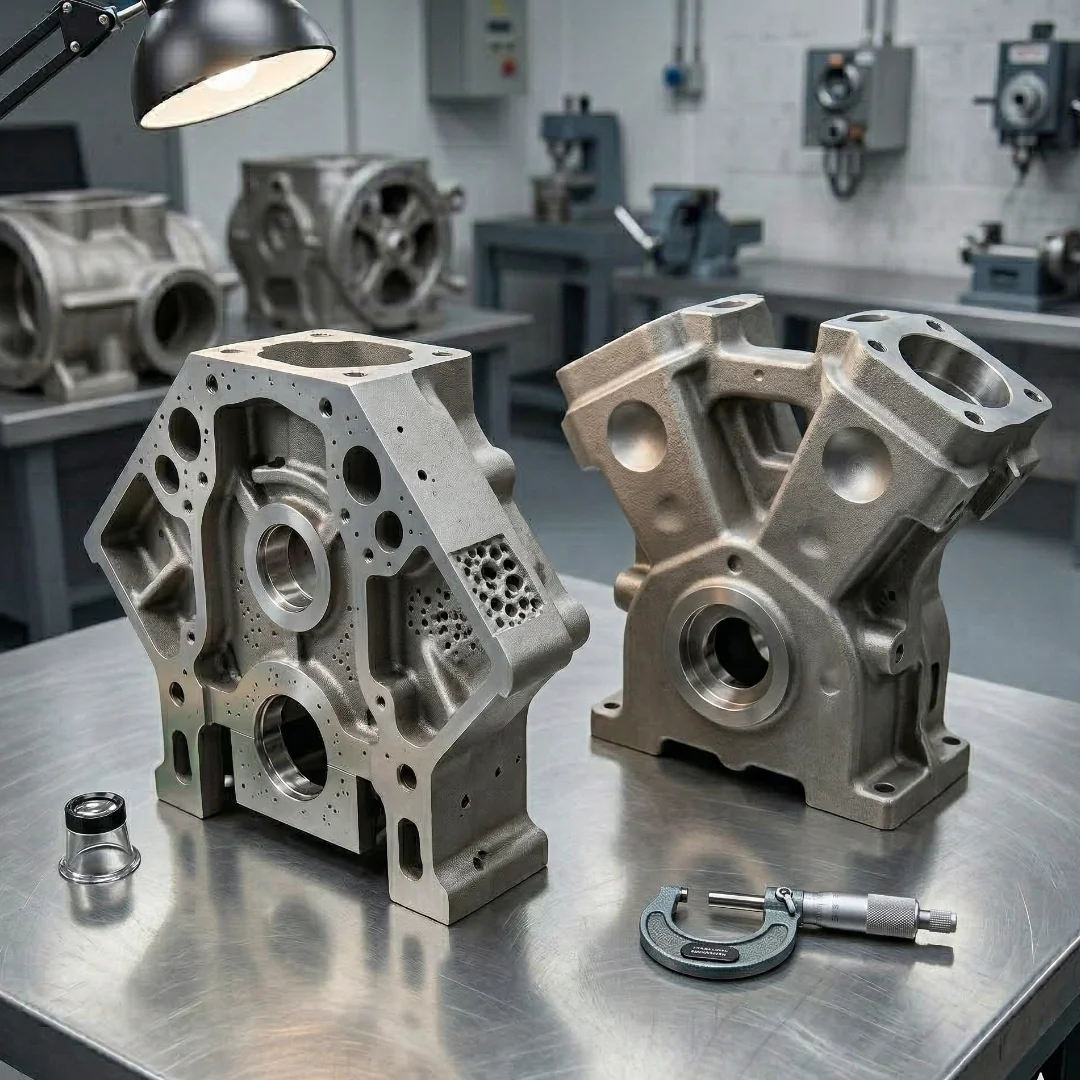
Precision Investment Casting for Complex Components: Design Guide and Capabilities
Precision investment casting is the process of choice when component geometry exceeds what machining, forging, or other casting methods can produce economically. It is capable of producing thin walls, internal passages, undercuts, and fine surface detail in a single operation in almost any castable alloy. This guide explains what makes investment casting suited to complex components, what the process can and cannot do, and how to design parts that get the best results.
What Makes a Component Complex?
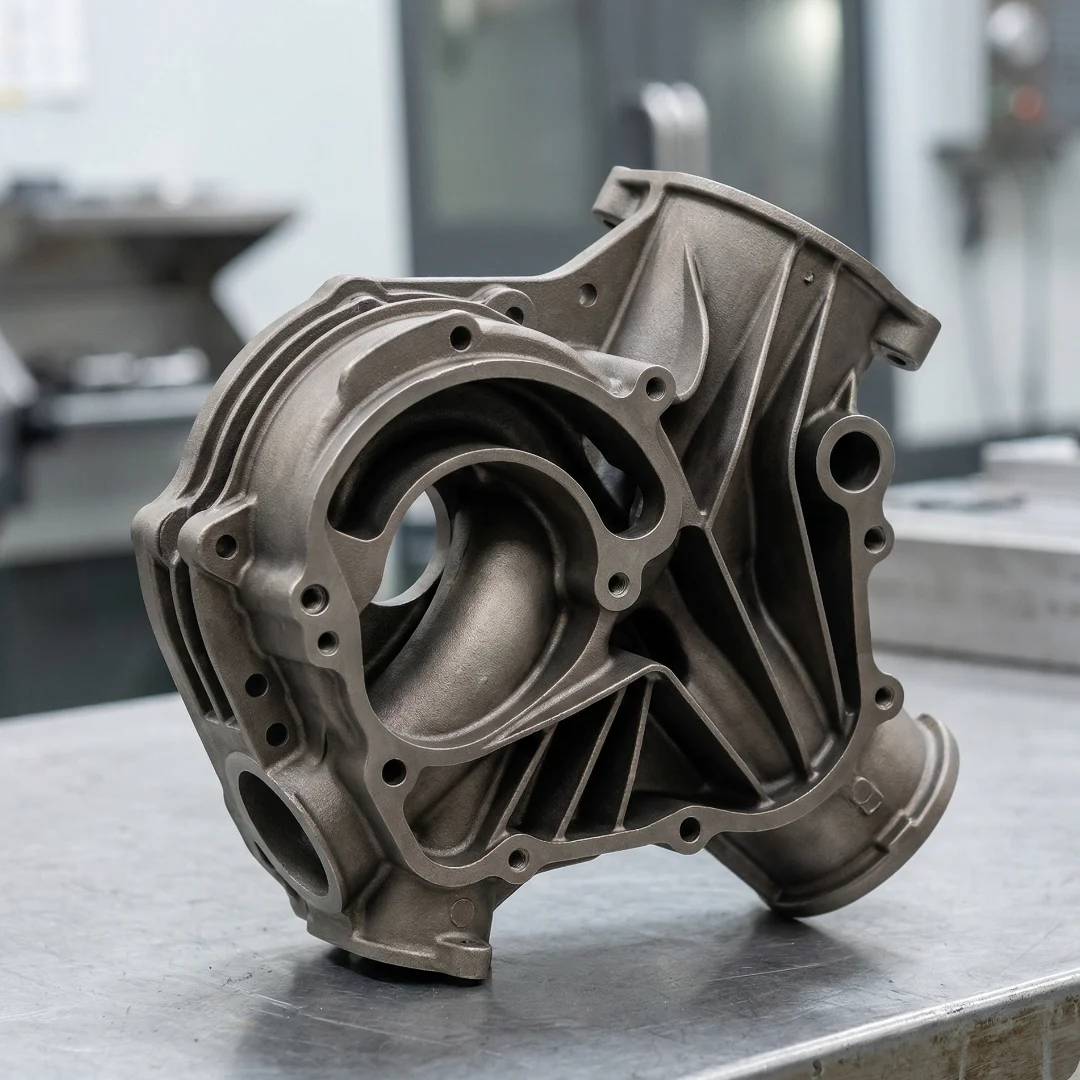
In manufacturing terms, complexity usually means one or more of the following: – Thin walls under 3mm that cannot be machined without excessive material removal – Internal passages or cavities that cannot be reached by a cutting tool – Undercuts or re-entrant features that prevent removal from a die or mould – Multiple features that would require separate machined components to be assembled – Very small radii, fine surface detail, or engraved text and logos – Unusual alloys that are difficult or expensive to machine from solid For components with these characteristics, investment casting is often the only process that produces the part as a single piece at reasonable cost.
Geometric Capabilities
Thin Walls
Investment casting can produce walls as thin as 0.75mm in aluminium and 1.0 to 1.5mm in stainless steel and nickel alloys, though 1.5 to 2mm is the practical minimum for reliable production. This compares favourably with sand casting (minimum 3 to 5mm) and die casting (minimum 0.8 to 1.5mm in aluminium only). Thin walls are achievable because the ceramic shell is preheated before pouring, allowing the metal to fill the cavity before it solidifies. The smooth ceramic surface also promotes uniform solidification.
Internal Passages
Internal passages such as coolant channels, oil galleries, and fluid pathways can be formed using ceramic cores placed inside the wax pattern before shell building. The core is dissolved or mechanically removed after casting, leaving the internal geometry intact. This capability is used extensively in aerospace turbine blades, where complex internal cooling channels allow the blade to survive temperatures above the alloy’s melting point by circulating cooling air through the internal passages. For industrial applications, internal passages in valve bodies, pump housings, and manifolds eliminate the need for drilled intersecting holes, which reduces machining cost and eliminates the risk of blind-hole swarf contamination.
Undercuts and Re-entrant Features
Because the wax pattern is melted out rather than physically removed, investment casting imposes no draft angle requirements for undercuts. Features that would lock a pattern into a sand mould or prevent ejection from a die casting tool can be cast freely. This allows investment casting to produce features like circumferential grooves and channels, internal threads on coarse pitches, overhanging flanges, and complex interlocking geometry.
Fine Surface Detail
The ceramic shell accurately replicates the surface of the wax pattern, which in turn accurately replicates the wax injection die. Surface detail down to 0.1mm is reproducible, making investment casting suitable for company logos and part numbers cast directly into the surface, fine serrations and textures, and small bosses and pads.
Dimensional Accuracy and Tolerances
| Feature | As-Cast Capability | After CNC Machining |
|---|---|---|
| Linear tolerance | ±0.1 to 0.25mm | ±0.01 to 0.05mm |
| Surface roughness | Ra 1.6 to 6.3μm | Ra 0.4 to 1.6μm |
| Minimum wall (steel) | 1.5 to 2.0mm | n/a |
| Minimum wall (aluminium) | 1.0 to 1.5mm | n/a |
| Minimum hole diameter (cast) | 6mm | Any size |
| Internal threads | M8 and above (coarse) | Any size and pitch |
| Draft angle required | Zero to minimal | n/a |
| Fine surface detail | Down to 0.1mm feature size | n/a |
Part Consolidation: Replacing Assemblies with Single Castings
One of the most commercially valuable applications of precision investment casting is replacing fabricated or machined assemblies with a single casting. Components that are currently made by welding, bolting, or pressing together multiple parts are frequently candidates for redesign as a single investment casting. The benefits of consolidation include: – Reduced assembly labour: fewer parts means fewer assembly operations. – Eliminated joints: welds and fastener interfaces are potential failure points. – Weight reduction: a casting designed for the load it carries uses material more efficiently than an assembly of standard sections. – Improved dimensional consistency: a single casting has tighter part-to-part variation than an assembly where tolerance stacks up across multiple components. To assess whether your assembly is a candidate for consolidation, the key questions are whether the geometry can be produced as a single casting, whether the alloy has adequate properties, and whether the volume justifies new tooling investment.
Design Guidelines for Complex Investment Castings
Wall Thickness
Maintain consistent wall thickness where possible. Abrupt section changes create hot spots during solidification that increase shrinkage risk. Where section changes are unavoidable, use gradual tapers rather than sharp steps. Recommended minimum wall thickness: – Aluminium alloys: 1.5mm – Stainless steel (304, 316L): 1.5 to 2.0mm – Duplex stainless (2205): 2.0 to 2.5mm – Nickel superalloys: 1.5 to 2.5mm
Radii and Fillets
All internal corners should have a minimum radius of 1.5mm. Sharp internal corners create stress concentrations in service and hot spots during solidification. Generous fillets improve both casting soundness and fatigue performance.
Holes and Bores
Holes larger than 6mm diameter can typically be cast. Smaller holes are more reliably drilled after casting. Through-holes are easier to cast than blind holes. Very deep, narrow blind holes should be drilled rather than cast.
Machining Allowances
Surfaces with tight tolerance or specific surface finish requirements should be machined after casting. Allow 0.5 to 1.0mm stock on these surfaces in the casting design. Identify datum surfaces clearly on the drawing to allow consistent CMM setup.
Draft Angles
Investment casting requires far less draft than sand or die casting. Zero draft is achievable on most external surfaces. Discuss specific features with your foundry early in the design process if zero or negative draft is required.
From Prototype to Production
Precision investment casting is unusual among production processes in that it is economical from single prototypes upward. The wax injection die can be machined from aluminium for prototype quantities, which gives lower cost and faster lead time than a hardened steel production tool, and can then be upgraded to steel when volumes justify it. This allows prototypes to be made in the actual production alloy and process, giving confidence that production parts will perform identically.