Sand Casting vs Investment Casting: Which Process Should You Choose?
Sand casting and investment casting are both widely used metal forming processes, but they suit very different applications. Choosing the wrong process adds cost, compromises quality, and creates problems that are expensive to fix after tooling is made. This guide explains the key differences so you can make the right decision before committing.
What Is Sand Casting?
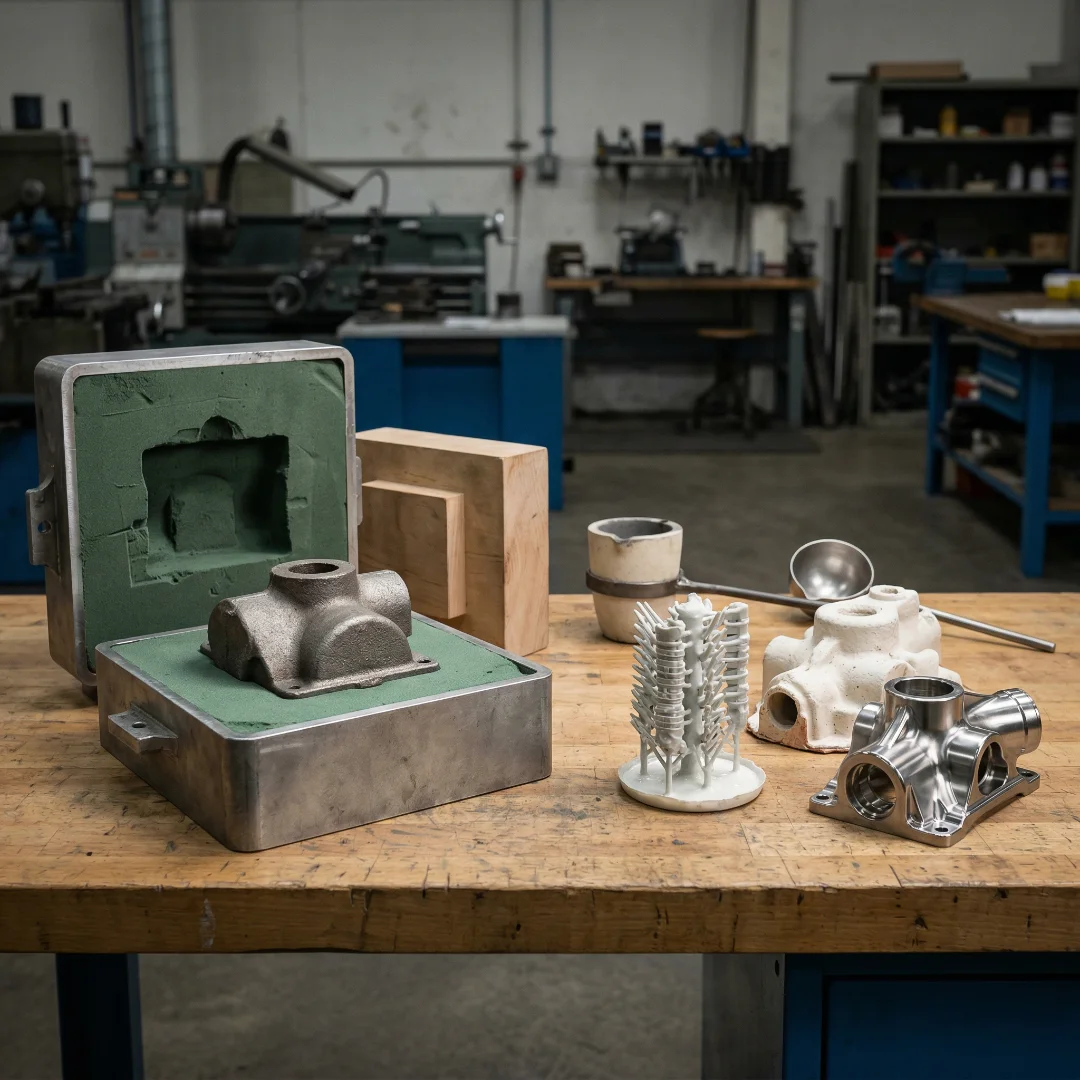
Sand casting uses a compacted sand mould to form the casting cavity. A pattern, usually made from wood, metal, or plastic, is pressed into sand to create an impression, then removed. Molten metal is poured into the cavity and allowed to solidify before the sand mould is broken away. Sand casting is the oldest and most widely available casting process. Almost any metal can be sand cast, tooling is inexpensive, and there is no practical upper limit on part size. These advantages make it the default choice for large, simple parts at low volumes.
What Is Investment Casting?
Investment casting (also called lost wax casting) produces parts by creating a wax pattern, coating it in ceramic, burning out the wax, and pouring molten metal into the cavity. The ceramic shell is broken away after solidification to reveal a near-net-shape part with good surface finish and dimensional accuracy. Investment casting involves more process steps than sand casting, which increases lead time and unit cost for very simple parts. In return, it delivers significantly better surface finish, tighter tolerances, and the ability to cast complex geometry that sand casting cannot produce economically.
Direct Comparison
| Factor | Sand Casting | Investment Casting |
|---|---|---|
| Dimensional tolerance | ±0.5–1.5mm | ±0.1–0.25mm as-cast |
| Surface finish | Ra 12.5–25μm (rough) | Ra 1.6–6.3μm (smooth) |
| Shape complexity | Moderate — cores needed for internal features | Excellent — undercuts, thin walls, internal passages |
| Tooling cost | Very low (£500–£3,000) | Low–medium (£1,500–£8,000) |
| Unit cost (low volume) | Lower for very simple parts | Higher for very simple parts |
| Unit cost (medium volume) | Higher once machining is factored in | Lower total cost for complex parts |
| Secondary machining needed | Significant | Minimal on non-functional surfaces |
| Alloy range | Very broad including large iron/steel | Very broad — best for stainless, nickel alloys |
| Part size | No practical limit | Best for small to medium parts |
| Lead time (first article) | Days to 2 weeks | 4–6 weeks |
| Best volume | 1–500 | 1–5,000+ |
Surface Finish
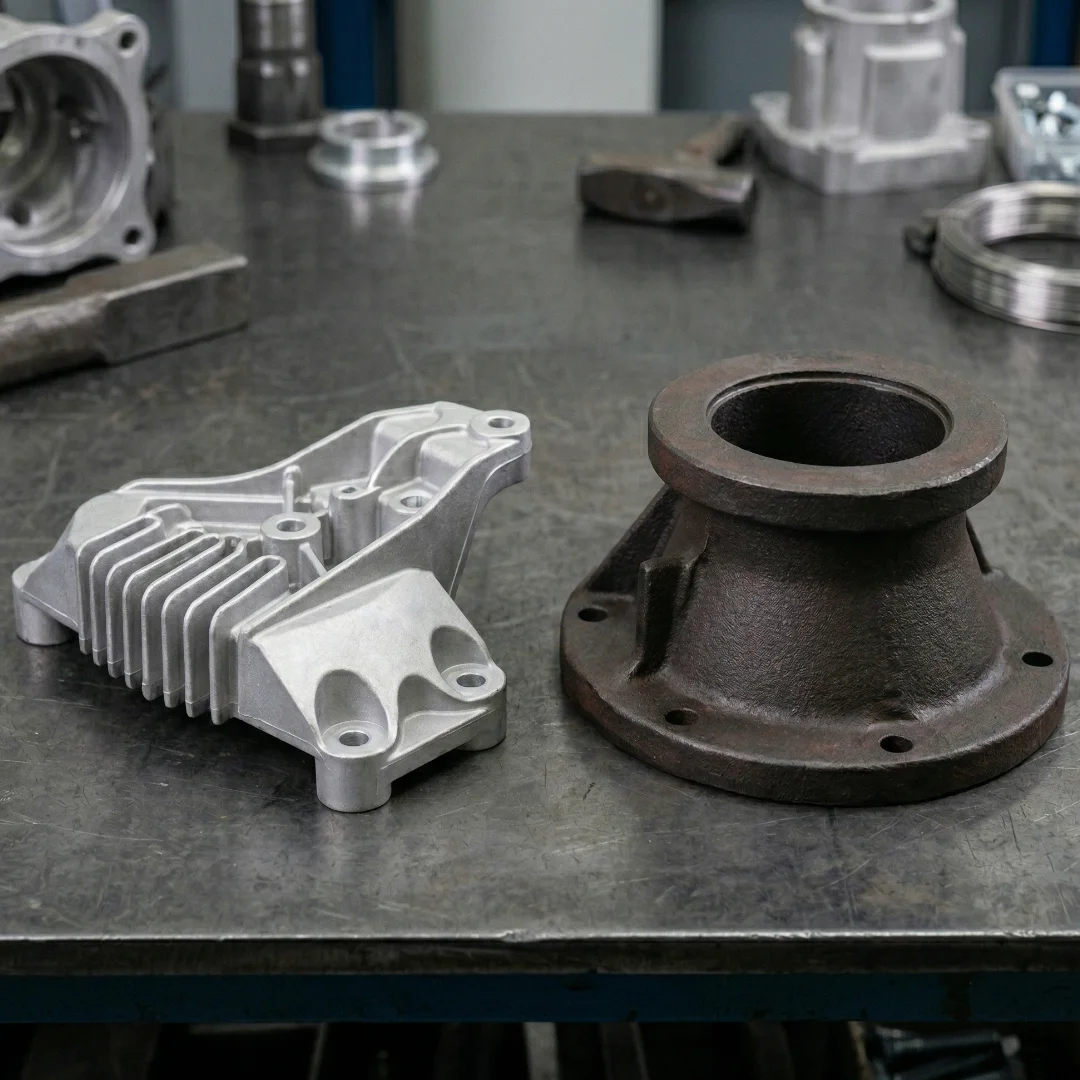
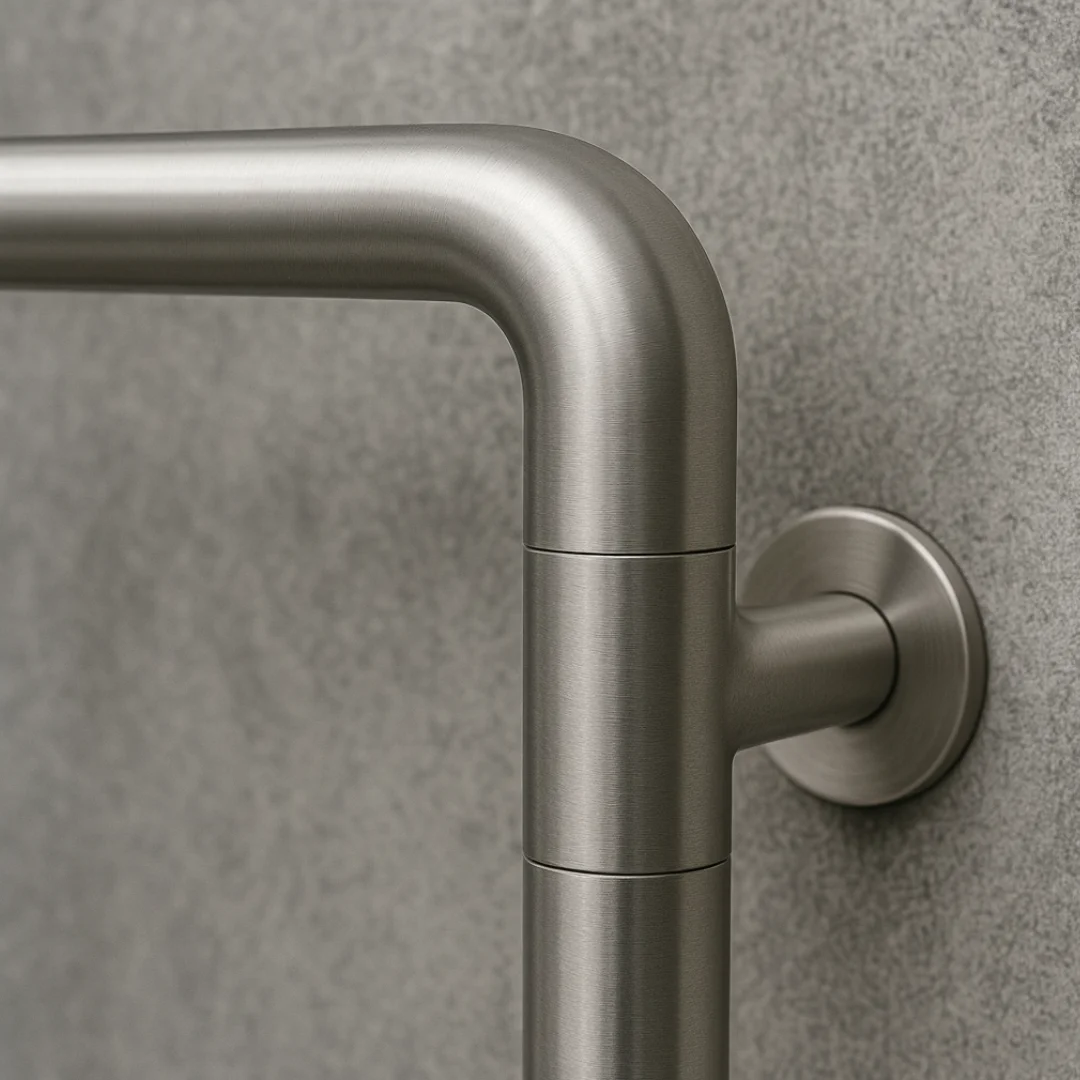
This is where the difference between the two processes is most visible. Sand casting produces a rough, granular surface (Ra 12.5–25μm) that typically requires significant machining or grinding before parts are usable. Investment casting produces a smooth as-cast surface (Ra 1.6–6.3μm) that is often acceptable without further finishing on non-functional surfaces. For parts where surface finish matters: food machinery, marine hardware, medical instruments, decorative components, investment casting is almost always the correct choice. Sand casting requires expensive secondary finishing operations to achieve comparable results.
Dimensional Accuracy and Tolerances
Sand casting tolerances are typically ±0.5–1.5mm depending on part size. The sand mould is inherently less stable than a ceramic shell, and dimensional variation increases with part size. Investment casting achieves ±0.1–0.25mm as-cast, tightened to ±0.01–0.05mm on machined surfaces. This means less material needs to be removed in secondary machining operations, which reduces cost and lead time on parts with tight tolerance requirements.
Tooling Cost
Sand casting tooling (the pattern) is inexpensive, typically £500–£3,000 depending on complexity. This makes sand casting attractive for very low volumes where tooling cost must be recovered quickly. Investment casting tooling (the wax injection die) costs more, typically £1,500–£8,000 for most parts. However, the die lasts for very high volumes and the lower unit cost at medium volumes often recovers the tooling cost quickly.
When to Choose Sand Casting
Sand casting is the better choice when: – Your part is large, sand casting has no practical size limit – Geometry is simple with no thin walls or complex features – Surface finish and tight tolerances are not required – Volume is very low (under 50 parts) and tooling cost must be minimised – You need parts quickly for early-stage prototyping where accuracy is not critical – Your alloy is iron or a large steel casting where investment casting is not economical
When to Choose Investment Casting
Investment casting is the better choice when: – Your part has complex geometry — thin walls, internal passages, undercuts – Surface finish matters — food grade, marine, medical, or decorative applications – Dimensional accuracy is important and you want to minimise machining – Your material is stainless steel, duplex steel, nickel alloy, or cobalt chrome – You are producing 50 to several thousand parts per year – You want to consolidate multiple fabricated parts into a single casting
Can You Switch Between Processes?
Yes — and it is common. Parts originally sand cast are frequently redesigned for investment casting when volumes increase, quality requirements tighten, or the cost of secondary machining becomes significant. The redesign usually pays for itself within a moderate production run. If you have an existing sand casting that is causing quality or cost problems, send us the drawing and we will assess whether investment casting offers a better solution.