Sustainable Practices in Metal Manufacturing: How Investment Casting Reduces Waste
Sustainability in metal manufacturing is increasingly a procurement consideration, not just an environmental one. Buyers and OEMs are under pressure from their own customers to demonstrate responsible sourcing, and that scrutiny extends to the manufacturing processes used to produce the components they buy. Investment casting has inherent sustainability advantages over several alternative processes, and foundries that operate responsibly can demonstrate measurable reductions in material waste, energy consumption, and scrap rates.
Investment Casting as a Near-Net-Shape Process
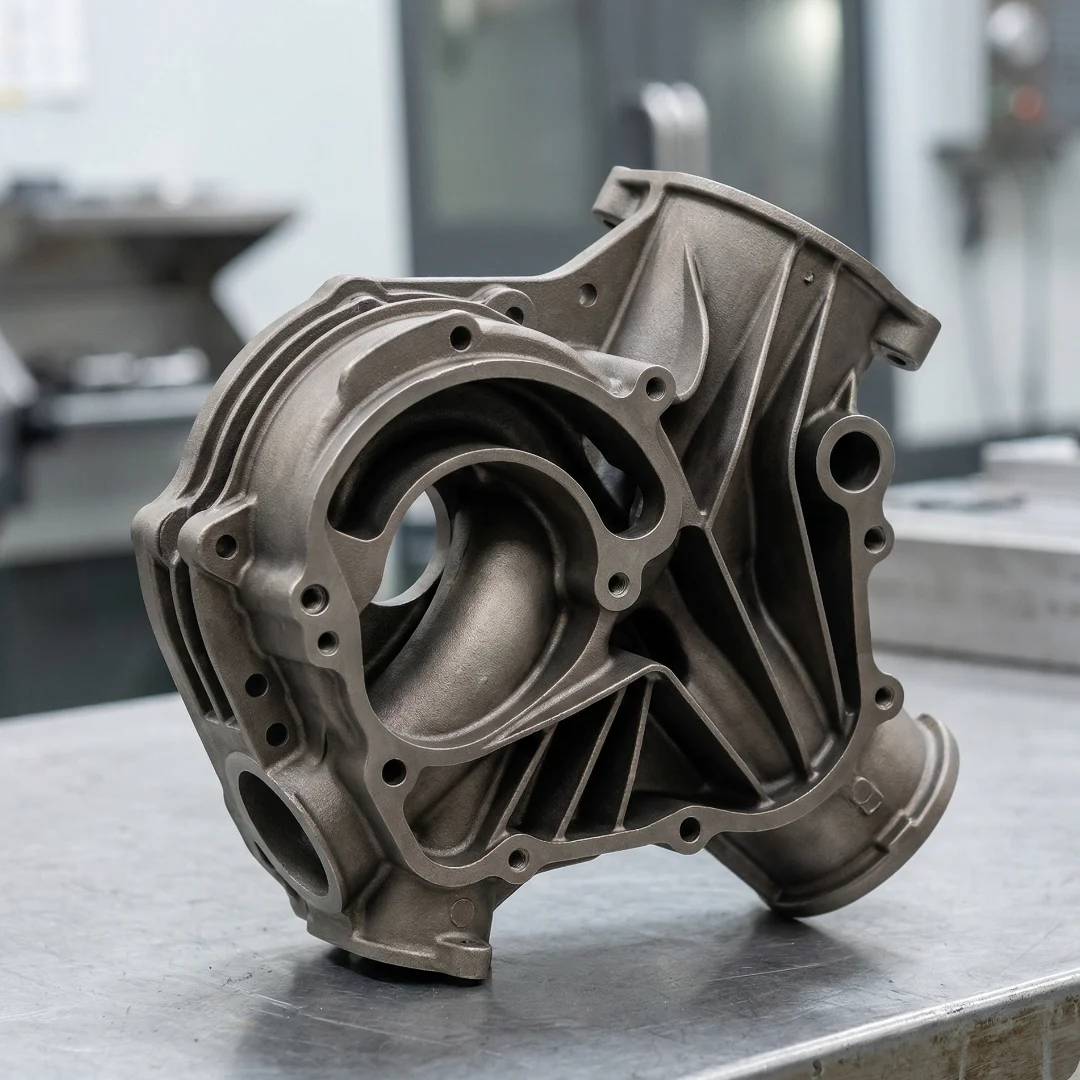
The most significant sustainability advantage of investment casting is its near-net-shape output. A well-designed casting arrives close to its final geometry, requiring minimal material removal to reach the finished specification. This contrasts directly with machining from solid billet, where a large proportion of raw material is cut away as swarf. For a typical complex stainless steel component, the buy-to-fly ratio when machining from solid billet can be 5:1 or higher, meaning five kilograms of raw material are consumed to produce one kilogram of finished part. The same component produced by investment casting typically has a buy-to-fly ratio of 1.2:1 to 1.5:1. The difference represents stainless steel that does not need to be mined, refined, melted, or transported. Over a production run of thousands of parts, this material saving is substantial both in cost and in environmental impact.

Metal Recycling and Closed-Loop Melting
Investment casting foundries operate with high material recovery rates. Sprues, runners, and risers, which are the gating system removed from finished castings, are returned directly to the furnace and remelted as part of the same alloy charge. Reject castings are similarly recycled rather than discarded. This closed-loop approach means that a well-run foundry loses very little raw material to waste. Metal that does not become a finished casting is recovered and reused in the next melt. For high-value alloys such as duplex stainless steel, nickel superalloys, and cobalt chrome, this recycling capability is a significant cost and sustainability benefit.
Energy Efficiency in the Casting Process
Investment casting consolidates multiple manufacturing steps into a single process. A component that would otherwise require separate forging, machining, drilling, and welding operations is produced in one casting operation followed by limited secondary machining. Each eliminated step represents energy that is not consumed. Induction melting furnaces, which are standard in modern investment casting foundries, are significantly more energy-efficient than older fuel-fired furnaces. They heat only the metal charge rather than the entire furnace volume, reducing energy consumption per kilogram of metal melted. Shell-building processes use ceramic slurry and refractory materials that are applied in controlled layers. Modern slurry systems are designed to minimise waste during coating, and wax removed during dewaxing is typically recovered and reprocessed.
Reducing Scrap Through Process Control
Scrap in casting represents wasted material, energy, and labour. A casting that is rejected requires the same resources to produce as an accepted one, but generates no value. Reducing scrap rates is therefore both an economic and sustainability objective. Modern investment casting foundries use several approaches to reduce scrap: Casting simulation software models metal flow and solidification before tooling is committed to, identifying potential shrinkage hot spots, cold shuts, and other defects in advance. Correcting these issues in simulation costs nothing and avoids the scrap that would result from discovering them in production. Statistical process control (SPC) monitors key process variables, including shell temperatures, metal chemistry, and pouring temperature, identifying drift before it produces defective castings. First article inspection using coordinate measuring machines (CMM) confirms that the first parts from a new tool meet drawing requirements before full production begins. This prevents the production of an entire batch to a specification the tooling cannot achieve.
Longevity and Lifecycle Considerations
A component that lasts longer in service requires less frequent replacement, which reduces the total material and energy consumed over the product’s lifetime. Investment cast components in corrosion-resistant alloys, particularly 316L stainless steel and 2205 duplex, have service lives that often significantly exceed those of lower-specification alternatives. For applications in marine, food processing, oil and gas, and chemical environments, specifying an investment casting in the appropriate alloy rather than a less resistant alternative can reduce replacement frequency substantially, which is a meaningful lifecycle sustainability benefit.
What to Look for in a Responsible Supplier
When assessing the sustainability credentials of an investment casting supplier, the most meaningful indicators are material recovery rate, scrap rate, use of casting simulation, and whether the foundry operates a formal quality management system such as ISO 9001. Energy sources and furnace technology are also relevant for buyers with specific carbon footprint commitments. At Apex Investment Casting, we work with foundry partners who operate closed-loop metal recovery, use induction melting, employ casting simulation as standard, and maintain documented quality systems. We can provide traceability documentation covering alloy composition, heat treatment records, and inspection results for components where this is required.
Moving Toward a Greener Future in Metal Manufacturing
As the push for sustainability intensifies, reducing shrinkage and waste in casting processes represents a pivotal step for the metal manufacturing industry. Technologies like vacuum suction casting exemplify how innovation can drive eco-friendly production, offering a blueprint for others to follow. By prioritizing these methods, manufacturers not only comply with evolving environmental standards but also position themselves as leaders in a market that values responsibility alongside reliability. For those in the industry looking to implement such practices, starting with a thorough audit of current processes can reveal quick wins in waste reduction. Ultimately, sustainable investment casting isn’t just about compliance, it’s about building a resilient, forward-looking operation that benefits the planet and the bottom line.