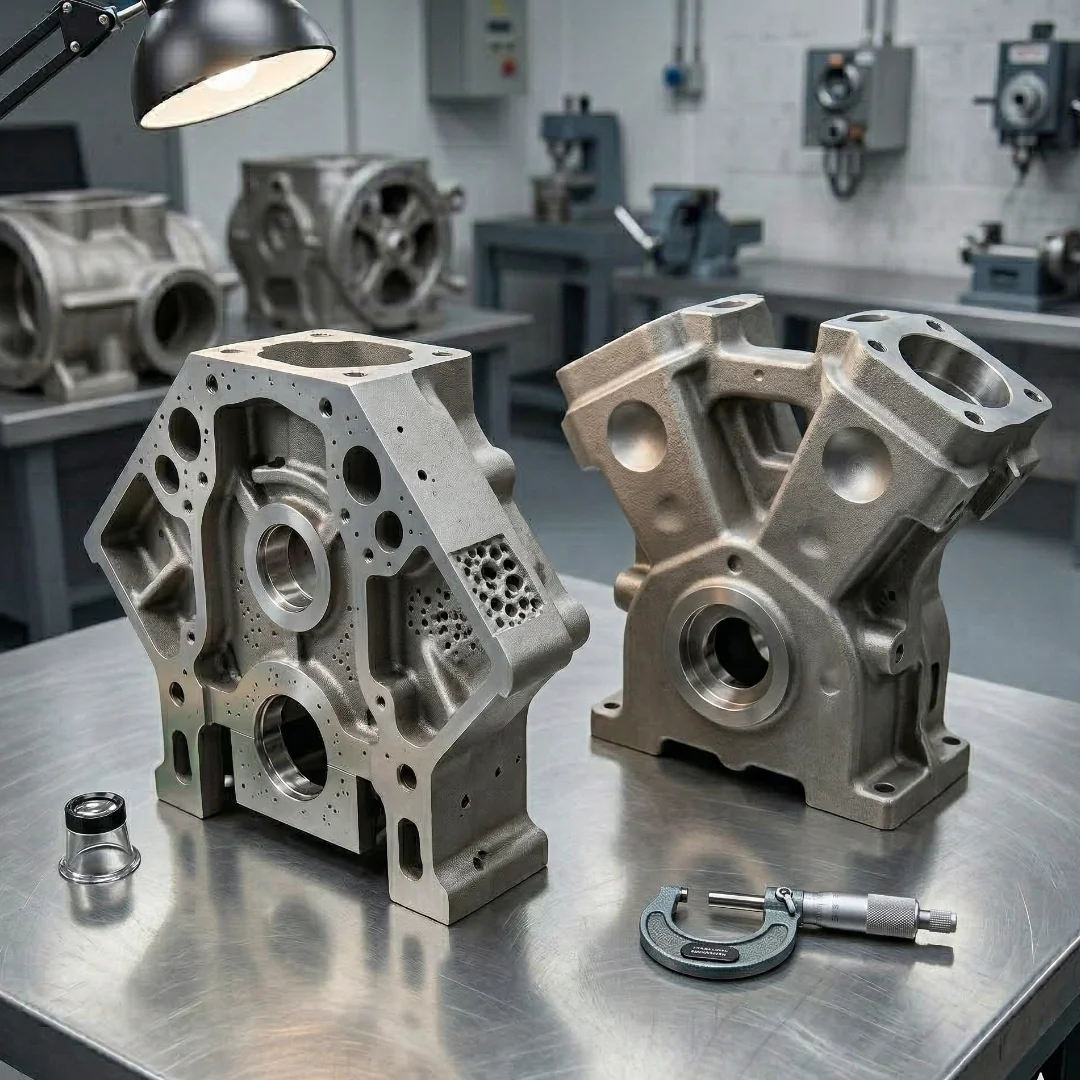
What Is Investment Casting? The Lost Wax Process Explained

Investment casting, also called lost wax casting, is a precision metal forming process used to produce complex, near-net-shape components from a wide range of alloys. It is one of the oldest manufacturing processes still in widespread industrial use, and remains the method of choice when geometry is too complex for machining or forging, or when surface finish and dimensional accuracy matter.

Metal casting mold held by hands

How the Investment Casting Process Works

Investment casting creates intricate, high-precision metal components by using a wax pattern to form a mold, which is then filled with molten metal. Below are the key steps in the process:

investment casting process icon step 1 - wav pattern creation

1 – Wax Pattern Creation

A wax model of the finished part is produced by injecting wax into a precision metal die. The die is machined to match the part geometry exactly, and the wax is injected under controlled pressure to reproduce every feature accurately. Pattern quality at this stage directly determines casting accuracy downstream, so die design and wax formulation both matter. Each pattern is inspected before moving to the next stage.
investment casting process icon step 2 - assemble tree

2 – Assembly

Individual wax patterns are attached to a central wax sprue and runner system, forming a tree that allows multiple parts to be cast in a single pour. The gating geometry is designed to promote smooth metal flow into each cavity and to position heavier sections closest to the feed metal, reducing shrinkage risk. Assembly is done carefully to avoid distorting the patterns before shell building begins.
investment casting process icon step 3 - build shell

3 – Shell Building

The wax tree is dipped repeatedly into ceramic slurry and coated with refractory stucco sand, building up a shell layer by layer. Each coat must be fully dried before the next is applied. Typically six to ten coats are applied, with shell thickness determined by the alloy being poured and the part geometry. Shell building is one of the more time-consuming stages and cannot be rushed without compromising quality.
investment casting process icon step 4 - wax removal

4 – Wax Removal (Dewaxing)

The completed shell is placed in an autoclave or flash fire furnace to melt and drain the wax from the cavity. The wax is typically recovered and recycled. After dewaxing, the shell is fired at high temperature to cure the ceramic fully and remove any remaining wax residue, leaving a clean cavity ready for metal. The fired shell is inspected for cracks before pouring begins.
investment casting process icon step 5 - heat and pour

5 – Mold Preheating & Metal Pouring

The ceramic shell is preheated before pouring to reduce thermal shock and help the metal flow into fine features before it begins to solidify. Metal is melted in an induction furnace and poured at a controlled temperature appropriate to the alloy. For thin-walled parts, vacuum-assisted pouring draws the metal into fine details that gravity alone may not fill reliably, reducing the risk of misruns and shrinkage defects.
investment casting process icon step 6 - remove shell

6 – Shell Removal

After the metal has solidified and cooled, the ceramic shell is broken away by mechanical vibration or high-pressure water jetting. Individual castings are cut from the sprue tree and the gate stubs are ground flush with the part surface. The parts are then shot blasted to remove any remaining ceramic and to produce a consistent surface texture, ready for dimensional inspection and any finishing operations required.

Investment Casting Tolerances and Surface Finish

ParameterAs-CastAfter CNC Machining
Dimensional tolerance±0.1–0.25mm±0.01–0.05mm
Surface roughnessRa 1.6–6.3μmRa 0.4–1.6μm
Minimum wall thickness0.75–1.5mm

Applications of Investment Casting

Investment casting excels in producing complex, high-precision parts for:

Valves and Pumps: Precision components for fluid control.

Gas Turbine Blades: Nickel-based alloy parts for aerospace and energy.

Automotive Parts: Engine and transmission components with tight tolerances.

Food Processing Equipment: Hygienic handles and stirring rods.

Medical Devices: Biocompatible tools and implants.

Materials Used in Investment Casting

Investment casting supports a broader range of alloys than most other casting processes:

Stainless steel (304, 316L, 2205 duplex) — corrosion resistance for food, marine, oil and gas applications.

Carbon and alloy steel — structural and wear-resistant components.

Nickel-based alloys (Inconel, Hastelloy) — high-temperature performance for aerospace and energy.

Aluminium alloys — lightweight components for aerospace and automotive.

Cobalt chrome — medical implants and high-wear industrial components.

Brass and bronze — corrosion-resistant marine and decorative hardware.

Techniques like vacuum suction casting enhance quality for thin-walled or complex parts, reducing defects like surface shrinkage.

Advantages of Investment Casting

Lost wax offers key benefits for manufacturers:

High Precision — Achieves tight tolerances (±0.1 mm), reducing machining needs.

Complex geometry — internal passages, thin walls, undercuts, and fine surface detail can all be cast in a single operation.

Material flexibility — almost any castable alloy can be investment cast, from stainless steel to nickel-based.

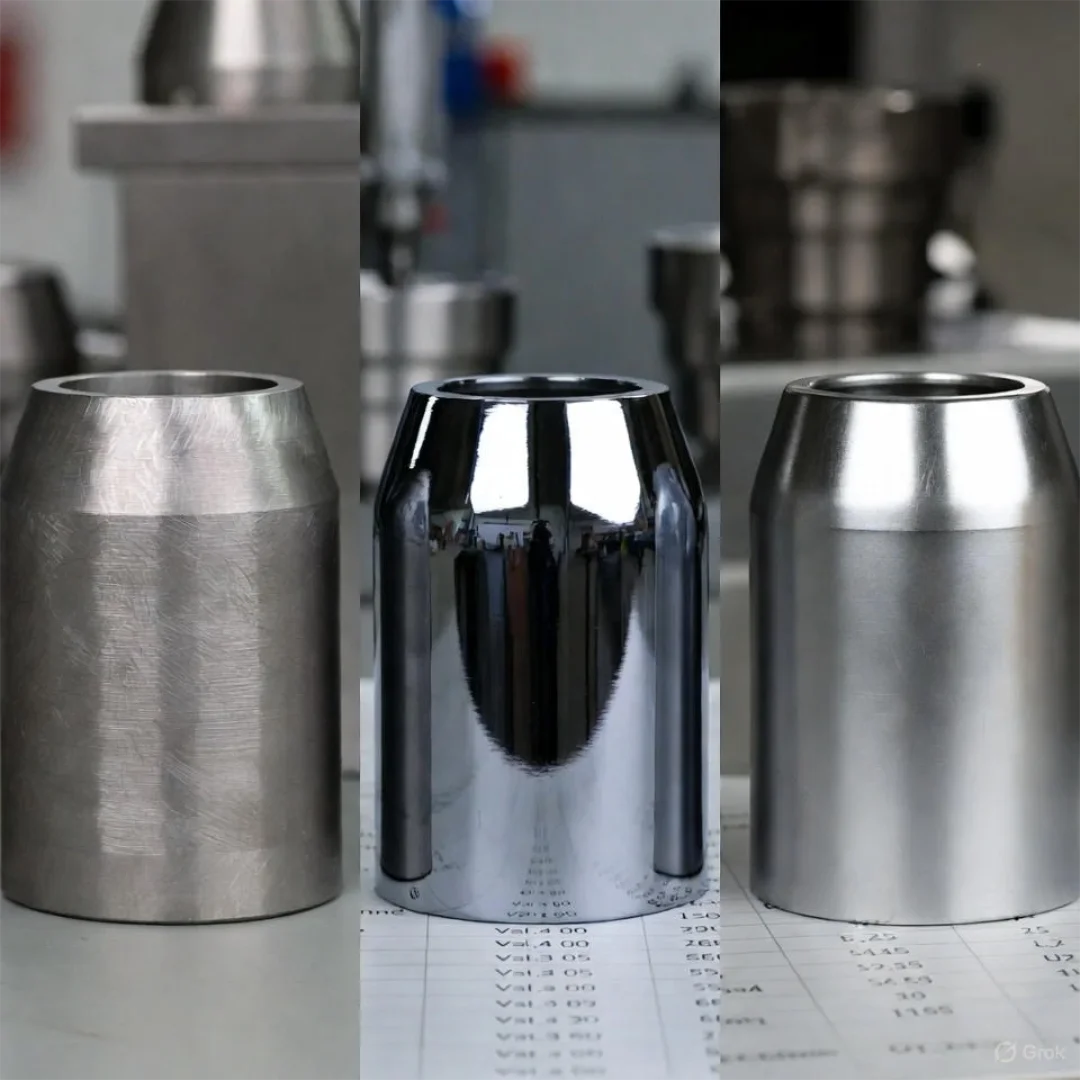
Good surface finish — Ra 1.6–6.3μm as-cast is often acceptable without further finishing.

Low to medium volume efficiency — tooling costs are low relative to die casting, making investment casting cost-effective from single prototypes up to several thousand parts per year.

Part consolidation — multiple fabricated or machined components can often be redesigned as a single casting, reducing assembly cost and potential failure points.

Industries That Use Investment Casting

Investment casting is used across industries where part complexity, material performance, or surface quality rule out simpler processes.

Aerospace — turbine blades, structural brackets, fuel system components.

Oil and gas — valve bodies, pump housings, manifolds.

Food machinery — hygienic fittings, mixer blades, conveyor components.

Marine — deck hardware, propeller hubs, cleats.

Medical — surgical instruments, orthopaedic implants.

Automotive — transmission components, turbocharger housings.

Investment Casting vs Other Processes

FactorInvestment CastingSand CastingDie Casting
Shape complexityExcellentGoodModerate
Surface finishVery goodPoorExcellent
Dimensional accuracyGoodModerateExcellent
Tooling costLow–mediumVery lowVery high
Best volume1–5,0001–50010,000+
Alloy rangeVery broadVery broadAl, Zn, Mg only

Why Choose Investment Casting?

Investment casting is the right choice when a component’s geometry, alloy, or surface finish requirements cannot be met economically by forging, machining from solid, or sand casting. It handles complex three-dimensional shapes with internal features, thin walls, and fine surface detail that other processes cannot produce without extensive secondary operations. The wide alloy range, from stainless steel and duplex grades to nickel superalloys, means it serves applications across industrial, marine, food processing, and energy sectors. If you have a component that might suit investment casting, contact us with a drawing and we will give you an honest assessment.
Frequently Asked Questions

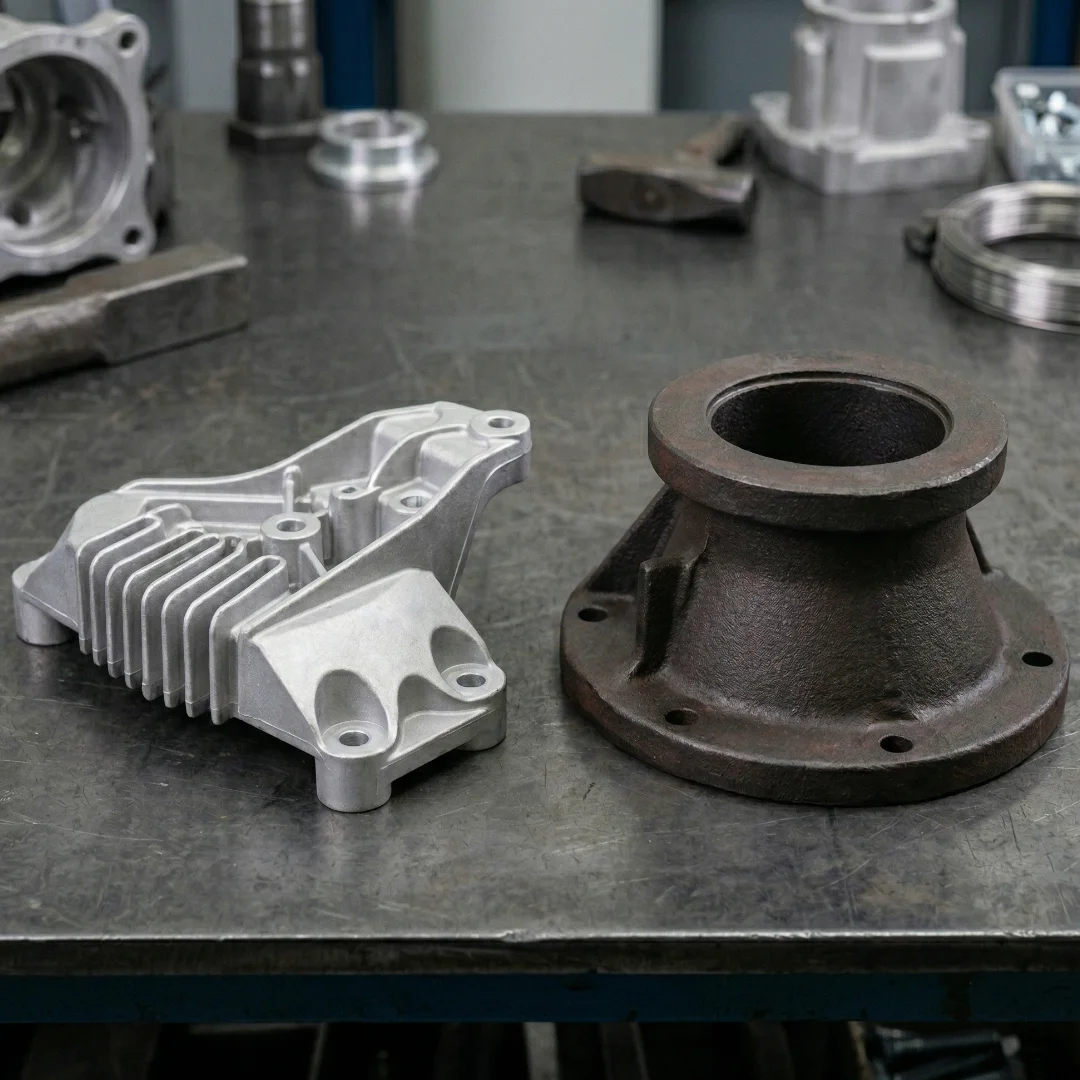
Investment casting uses a disposable ceramic mould formed around a wax pattern. Die casting forces molten metal under high pressure into a permanent steel die. Die casting is faster and more accurate at very high volumes but is limited to non-ferrous alloys and simpler geometry. Investment casting suits a broader alloy range, more complex shapes, and lower volumes.
Sand casting uses a compacted sand mould and is cheaper to tool, but produces a much rougher surface finish and lower dimensional accuracy than investment casting. Investment casting is the better choice when surface quality, accuracy, or geometric complexity matter.
Oil and gas, food processing, marine, and industrial machinery sectors are among the most consistent users of investment casting for components where geometry is too complex for forging or surface finish requirements rule out sand casting. Medical device manufacturers use it for surgical instruments and implant components where precision and biocompatible alloys are required. Automotive and energy sectors use it for turbocharger housings, valve bodies, and pump components. The process suits any industry where a complex shape needs to be produced accurately and repeatedly in a metal that would be difficult or impossible to machine from billet.
Vacuum suction casting, used by Quanzhou suppliers, reduces defects like shrinkage, ideal for thin-walled parts like valves and pumps.
Investment casting is slower than die casting and not suited to very high production volumes where die casting’s speed advantage justifies the higher tooling cost. The ceramic shell building process takes several days and cannot be compressed, so lead times are longer than for simple machined or stamped parts. Part size is also a practical constraint: investment casting is most efficient for small to medium components, typically under a few kilograms. For very large parts, sand casting is more practical. Finally, while tooling cost is low compared to die casting, it is higher than sand casting, so for very simple parts needed in small quantities, sand casting may be more economical.
As-cast tolerances are typically ±0.1–0.25mm. Secondary CNC machining on functional surfaces can achieve ±0.01–0.05mm where required.
Investment casting is viable from single prototypes upward. Tooling cost is relatively low, so small batches are economical. Unit cost reduces as volume increases, but there is no practical minimum.

More News & Articles

Sand Casting vs Investment Casting: Which Process Should You Choose?

Sand casting and investment casting are both widely used metal forming processes, but they suit very...

Precision Investment Casting for Complex Components: Design Guide and Capabilities

Precision investment casting is the process of choice when component geometry exceeds what machining...

Investment Casting for Automotive: Components, Materials and Advantages

Investment casting plays an important role in automotive manufacturing, producing precision metal co...